Blog
7 Cringe-Worthy Mistakes You’re Making with Entrance Door Cleaning (And How to Fix Them)

First impressions are formed in seconds. Before a tenant, a high-value client, or a potential investor ever speaks to your staff, they have already judged your property. They did it the moment they reached for the door handle.
At Aspen Metal Services, we’ve seen firsthand how a pristine entrance can elevate a building’s entire profile. Conversely, we’ve seen how improper entrance door cleaning can quietly erode a property's value: and its metal finishes. Many property managers believe they are doing the right thing by tasking janitorial crews with daily wipe-downs, but without specialized knowledge, "cleaning" often turns into "damaging."
It isn’t just about the aesthetics: it’s about asset preservation. When you make these common mistakes, you aren't just leaving a smudge; you’re potentially inviting permanent oxidation, pitting, and finish failure.
Here are the seven most cringe-worthy mistakes you’re likely making with your entrance door cleaning and the professional-grade fixes to stop the damage today.
1. UNLEASHING CHEMICAL WARFARE ON SENSITIVE FINISHES
The most common mistake we encounter is the "one-size-fits-all" approach to cleaning solutions. Many off-the-shelf industrial cleaners contain harsh detergents, solvents, or high-pH chemicals that are far too aggressive for architectural metal.
THE PROBLEM: Harsh chemicals strip away protective sealants and clear coats. On bronze or brass, this leads to rapid, uneven tarnishing. On anodized aluminum, it can cause "blooming" or white powdery spots that are notoriously difficult to remove. Furthermore, these chemicals often leave a sticky residue that actually attracts more dirt, creating a cycle of constant, ineffective cleaning.
THE FIX: Switch to pH-neutral, eco-friendly cleaners. At Aspen Metal Services, we advocate for the "less is more" philosophy. Mild soap and warm water are often more effective and significantly safer. For stubborn grease, a highly diluted, biodegradable degreaser can work, but it must be followed by a thorough rinse. If you aren't sure if your cleaner is safe, it’s probably not.
2. THE "SANDPAPER" EFFECT OF DIRTY CLOTHS AND SPONGES
It seems counterintuitive, but your cleaning tools might be your entrance’s worst enemy. We often see janitorial staff using the same rag for the lobby floor as they do for the polished stainless steel door frames.
THE PROBLEM: A dirty cloth is essentially a sheet of sandpaper. It traps microscopic grit, sand, and metal shavings from previous tasks. When these are rubbed across a metal surface, they create "swirl marks" and fine scratches. Over time, these scratches dull the reflection of the metal and provide a foothold for moisture and pollutants to begin the corrosion process.
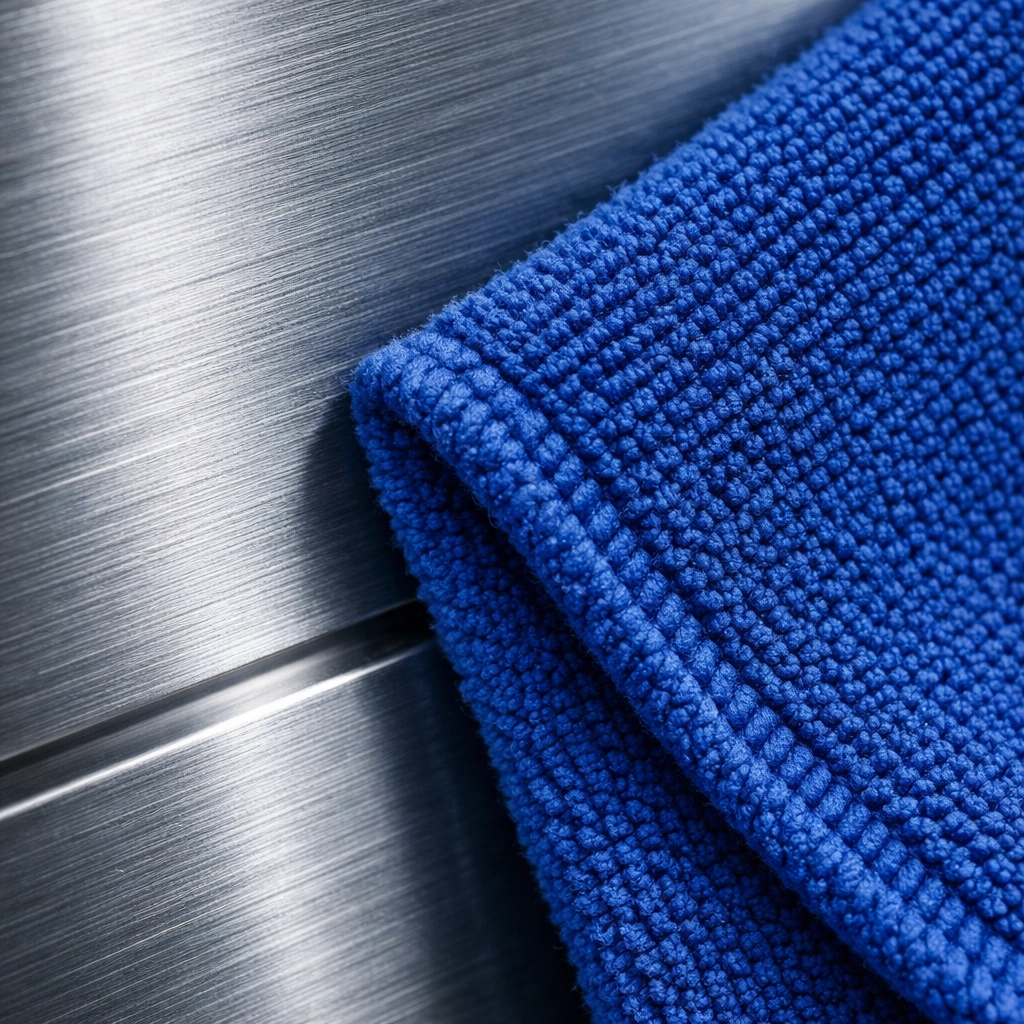
THE FIX: Use fresh, dedicated microfiber cloths for every cleaning session. Microfiber is engineered to lift and trap particles rather than dragging them across the surface. Ensure your team has a strict color-coding system to prevent cross-contamination between floor tools and metal surfaces.
3. ABRASIVE SCRUBBERS: THE QUICKEST WAY TO RUIN A FINISH
When a stubborn scuff mark won't come off, the temptation is to grab a green scouring pad or, even worse, steel wool. This is a critical error that we see all too often in the field.
THE PROBLEM: Most modern entrance doors have a specific grain or a protective lacquer. Abrasive scrubbers destroy these instantly. Steel wool can even leave behind tiny iron particles that will rust on the surface of your stainless steel, leading to "tea staining" that looks like the door itself is rotting.
THE FIX: Patience over power. If a mark is stubborn, let a mild, eco-friendly cleaning solution sit on the spot for 60 seconds to break down the bond. Use only soft-bristled brushes or non-abrasive sponges. If the mark remains, it may require professional metal restoration rather than more aggressive cleaning.
4. NEGLECTING THE HIGH-TOUCH HARDWARE
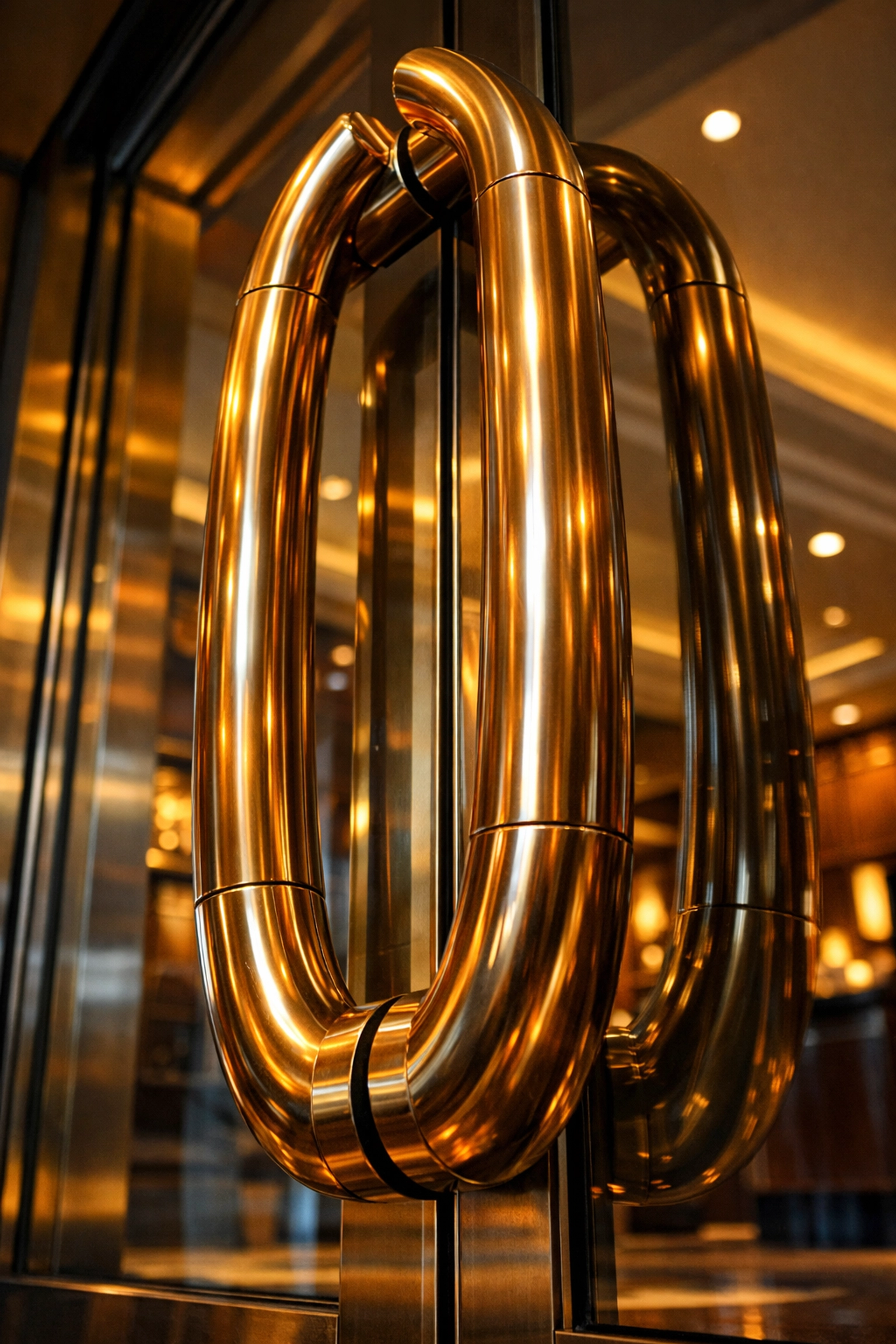
The door itself might look okay, but what about the handles, push plates, and locks? These are the most critical components of the entrance experience because they involve physical touch.
THE PROBLEM: Hardware collects skin oils, acids, and bacteria at an alarming rate. These biological contaminants are surprisingly corrosive to metal finishes. Neglected hardware doesn't just look "greasy": it eventually develops permanent pitting and discoloration where people’s hands most frequently make contact.
THE FIX: Hardware requires its own specific protocol. It should be cleaned more frequently than the rest of the door: potentially several times a day in high-traffic buildings. Focusing on these high-touch zones is essential for both hygiene and aesthetics. For a deeper look at managing these surfaces, check out our guide to mastering high-touch surface hygiene.
5. THE "HALF-CLEAN" TRAP: IGNORING THE INTERIOR
Property managers often focus entirely on the exterior because that’s what "the world" sees. However, the interior side of your entrance doors is just as important for tenant satisfaction.
THE PROBLEM: Interior metal surfaces are subject to different but equally damaging stressors: HVAC dust, indoor pollutants, and "back-side" fingerprints. When only the outside is cleaned, the contrast makes the inside look even filthier. Furthermore, dirt buildup on the interior side of the frame can interfere with the door's seal and hardware longevity.
THE FIX: Your entrance door cleaning checklist must include both sides of the door, the top of the frame (where dust hides), and the threshold. A truly clean entrance is 360 degrees. If you aren't sure if your current routine is hitting all the marks, you can take our Is it time to restore? quiz to evaluate your building’s current state.
6. FORGETTING THE GLASS-TO-METAL INTERFACE
Many cleaning crews treat glass cleaning and metal cleaning as two entirely separate jobs, using different chemicals for each. While the materials are different, they meet at a critical juncture.
THE PROBLEM: Over-spraying glass cleaner onto metal frames is a major cause of finish degradation. Glass cleaners often contain ammonia, which is devastating to many metal patinas and protective waxes. Conversely, metal polishes can leave oily streaks on glass that are a nightmare to remove.
THE FIX: Spray your cleaner onto the cloth, never directly onto the door. This prevents "overspray" from reaching the neighboring material. When cleaning the glass, use a dedicated microfiber and move in one direction to prevent streaks. For more tips on making that first impression count, see our article on entrance door cleaning for building image.

7. APPLYING TOO MUCH PRESSURE (THE "SCRUB TILL IT SHINES" MYTH)
There is a common misconception that the harder you press, the cleaner the surface gets. In the world of architectural metal, the opposite is usually true.
THE PROBLEM: Excessive pressure can cause the metal to flex or warp slightly, but more commonly, it causes "burnishing." This is when the friction of the cloth actually changes the texture of the metal grain, creating a shiny spot in the middle of a satin finish. These spots are impossible to "clean" away because the metal itself has been physically altered.
THE FIX: Use light, circular motions and let the chemistry of the cleaner do the work. If you find yourself needing to lean into the door to get it clean, your cleaning solution isn't doing its job, or the metal has reached a state where cleaning is no longer enough.
BEYOND CLEANING: THE ROLE OF PROFESSIONAL MAINTENANCE
Cleaning is about removing daily dirt. Maintenance and restoration are about protecting the integrity of the asset.
Think about it: even the best cleaning routine cannot fix a scratched finish, an oxidized bronze frame, or a pitted stainless steel handle. When the "cringe-worthy" mistakes listed above have already taken place, you are no longer in the realm of cleaning: you are in the realm of restoration.
At Aspen Metal Services, we specialize in moving buildings from "managed" to "magnificent." We don’t just wipe down surfaces; we analyze the metallurgy, identify the specific needs of your finish, and apply professional-grade protection that makes daily cleaning easier and more effective.
By avoiding these seven mistakes, you can extend the life of your metal fixtures and keep your building looking its best. But if your entrance doors have already lost their luster, it’s time to call in the experts. Don't let a bad first impression cost you a tenant or a deal.
Whether you need a one-time restoration or a low-disruption maintenance plan, we are here to ensure your entrance doors reflect the quality of the business inside.