Blog
Elevator Cleaning 101: A Beginner's Guide to Mastering High-Touch Surface Hygiene

Your building's elevators see more daily traffic than just about any other surface in your property. Every button press, every handrail grip, every shoulder brush against the wall: it all adds up to a hygiene challenge that most facilities underestimate.
Here's the reality: elevator cabs are germ superhighways. And if you're not cleaning them correctly, you're either spreading contamination or damaging expensive equipment. Sometimes both.
Let's fix that.
WHY ELEVATOR HYGIENE ISN'T JUST ABOUT CLEANLINESS
Think about the last time you rode an elevator in your building. How many surfaces did you touch? How many other people had touched those same spots in the hour before you?
The average elevator button gets pressed hundreds of times per day. Handrails? Even more contact. And unlike doorknobs that people might avoid touching, elevator buttons are non-negotiable: everyone has to press them.
This isn't just about appearances. It's about tenant health, liability protection, and the longevity of your elevator equipment. The wrong cleaning approach can corrode control panels, create electrical hazards, and void your elevator maintenance warranties.
The right approach? That's what we're covering today.
THE HIGH-TOUCH HIERARCHY: PRIORITIZE WHAT MATTERS MOST
Not all elevator surfaces carry equal risk. You need a cleaning strategy that focuses energy where contamination is highest.
Priority Level 1: Buttons and Control Panels
These are the most critical surfaces in your elevator. Every single rider touches them, and many touch them multiple times per trip. The call buttons outside the elevator? Those see even heavier traffic from people who press repeatedly while waiting.
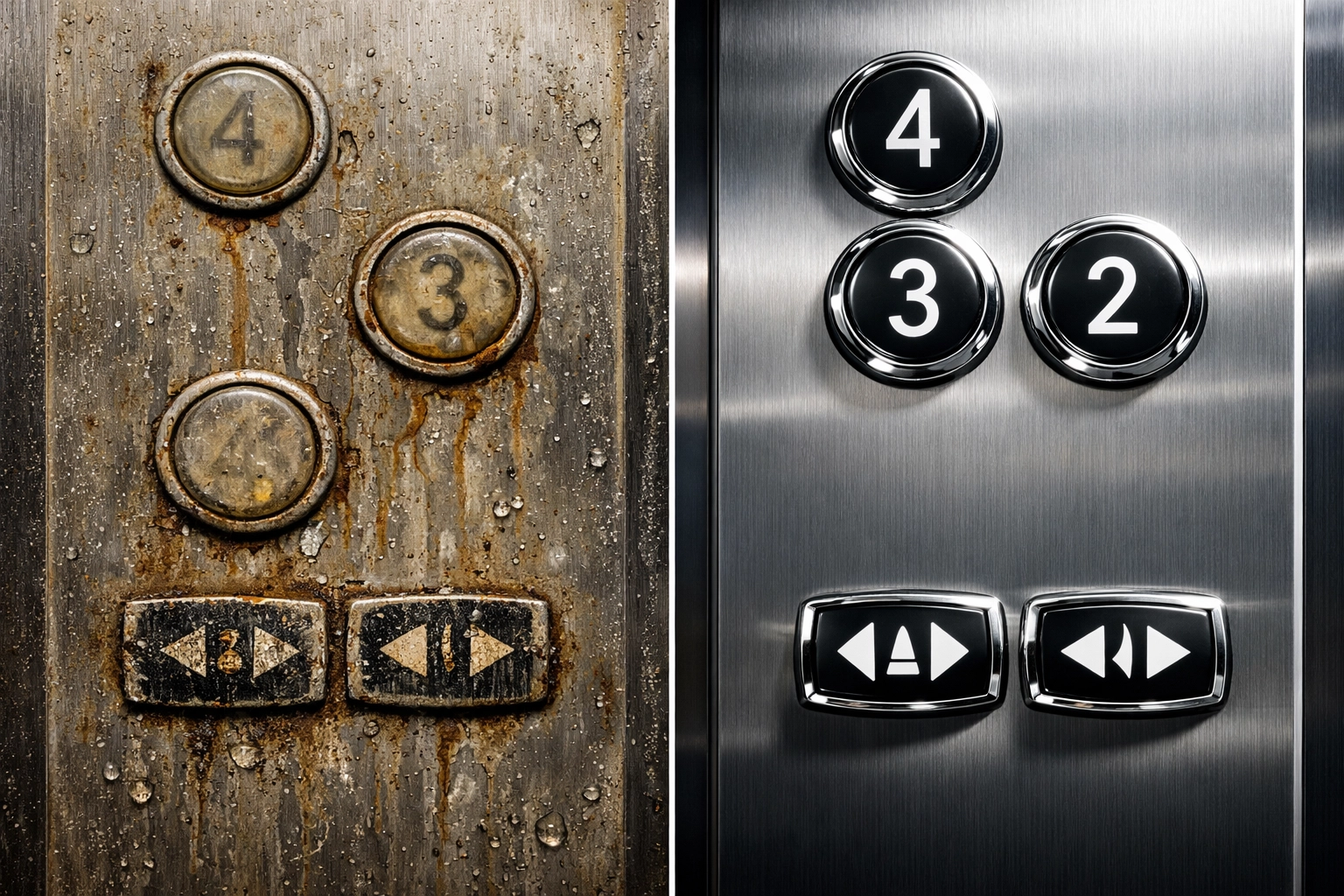
Here's where most cleaning crews get it wrong: they spray cleaner directly onto the buttons. Never do this. Excess moisture seeps into the control panel, causing electrical shorts, corrosion, and expensive repairs that aren't covered under your maintenance contract.
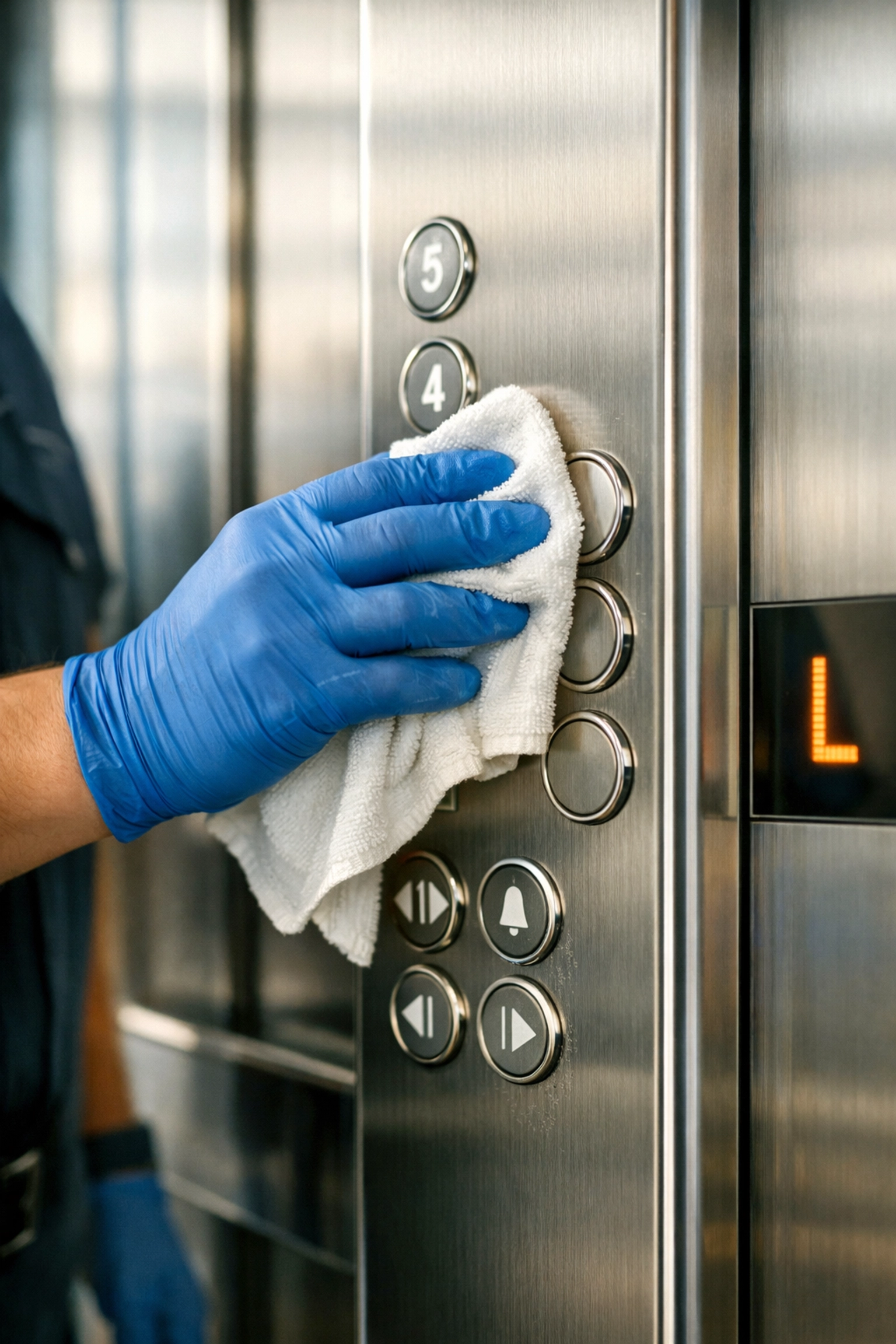
The correct technique: Spray your cleaning solution onto a microfiber cloth first, then wipe the buttons and panel surface. Use a 70% alcohol solution or approved antibacterial cleaner: nothing stronger. The cloth should be damp, not dripping.
Priority Level 2: Handrails and Wall Surfaces
These receive constant contact from riders steadying themselves during movement. Handrails are often stainless steel, while walls might be laminate, powder-coated metal, or textured panels.
Different materials require different approaches. Stainless steel handrails need stainless steel cleaning agents to avoid spotting and maintain their finish. For laminate or coated walls, use a solution of no more than 70% alcohol applied with a microfiber cloth.
Avoid abrasive cleaners that scratch protective coatings. Those scratches create texture where bacteria can hide and multiply.
Priority Level 3: Doors, Tracks, and Floors
Floor debris is more than unsightly: it's a hygiene issue. Dirt tracked into the cab gets ground into carpet fibers or spread across tile, creating bacterial breeding grounds.
Door tracks accumulate surprising amounts of debris: dust, dirt, food particles, and hair. This buildup doesn't just look bad; it can interfere with door operation and harbor germs at ground level where they're easily disturbed and redistributed.
THE PRODUCTS YOU SHOULD NEVER USE
Let's talk about what not to do, because these mistakes are more common than they should be.
Bleach-Based Products
Bleach damages polycarbonate fixtures, yellows plastics, and creates harsh fumes in the confined space of an elevator cab. Your tenants will notice: and they won't appreciate it. More importantly, bleach can corrode metal components and degrade protective coatings.
Direct Application of Alcohol to Buttons
We mentioned this earlier, but it bears repeating: alcohol sprayed directly on buttons causes corrosion and electrical damage. Always apply to your cloth first. The control panel assembly isn't sealed against liquid intrusion, and even small amounts of moisture in the wrong place can cause failures.
Sponges
Sponges hold too much moisture and can't be wrung out adequately for electronic surfaces. They also harbor bacteria between uses. Stick with microfiber cloths that you can launder properly between cleanings.
Strong-Odored Cleaners
Your elevator is a small, enclosed space with limited ventilation. Strong chemical smells linger and concentrate, creating an unpleasant experience for every rider. Choose low-odor or odorless products whenever possible.
Polishing Products on Floors
That shine might look great initially, but polishing products create dangerous slip hazards in elevator cabs. Use non-abrasive, non-corrosive cleaners with a flat mop for tile or steel flooring. The goal is clean, not glossy.
FREQUENCY: HOW OFTEN IS ENOUGH?
The honest answer? More often than you're probably doing it now.
In high-traffic commercial buildings: office towers, shopping centers, medical facilities: elevator high-touch surfaces should be sanitized multiple times daily. Buttons and handrails in busy buildings need attention every few hours during peak traffic periods.
At minimum, every elevator in your portfolio should receive daily attention to high-touch surfaces. This isn't overkill; it's basic hygiene in a post-pandemic world where tenants notice and expect higher cleaning standards.
Here's a practical framework:
Daily (at minimum):
- Button panels and call buttons
- Handrails
- Door surfaces
- Track cleaning (sweep/vacuum)
- Floor maintenance
Multiple times daily in high-traffic buildings:
- Button sanitizing
- Handrail wipe-downs
- Quick floor sweeps
Weekly:
- Deep clean of all wall surfaces
- Detailed track cleaning with non-abrasive cleaners
- Thorough floor cleaning or carpet vacuuming
THE RIGHT TOOLS MAKE THE DIFFERENCE
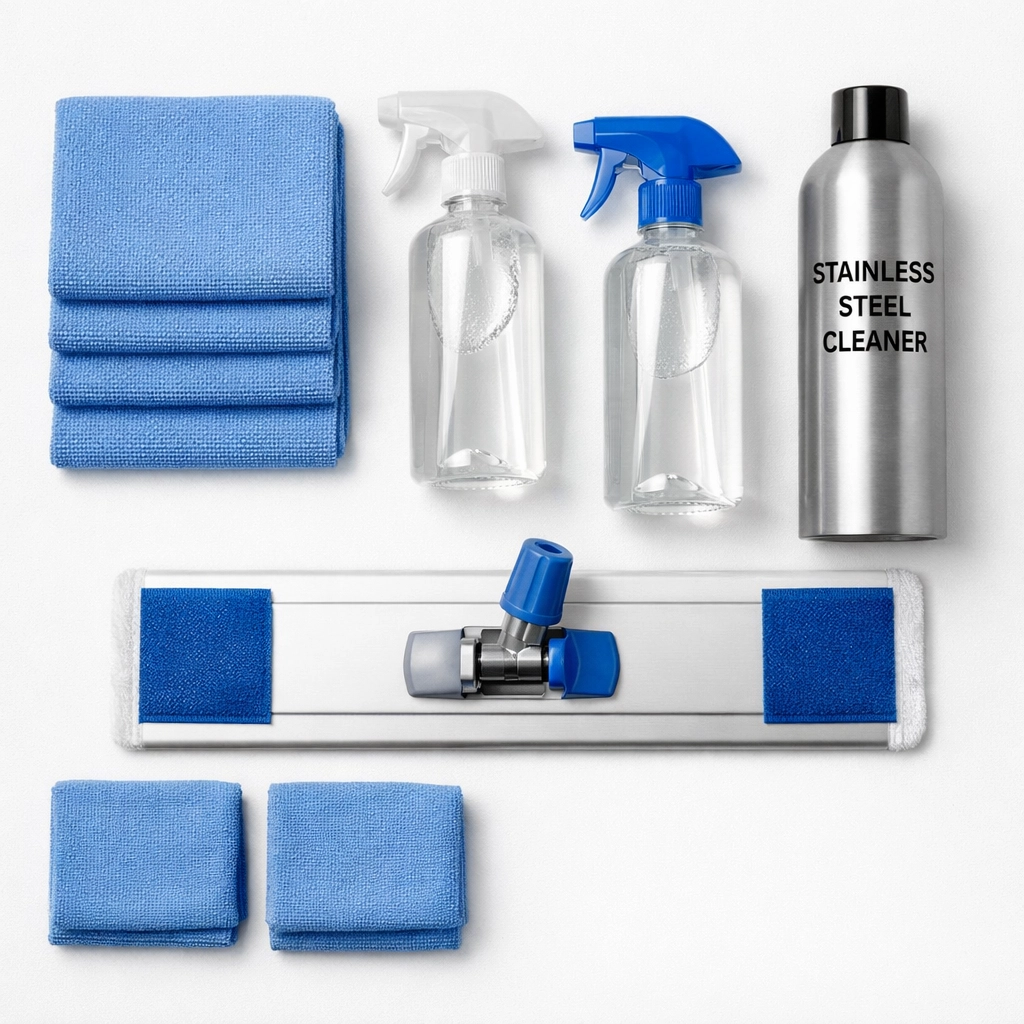
Your cleaning crew needs the right equipment to do this job correctly without causing damage.
Essential supplies:
- Microfiber cloths (multiple, changed frequently)
- 70% alcohol solution or approved antibacterial cleaner
- Stainless steel cleaning agent for metal surfaces
- Non-abrasive cleaner for varied materials
- Flat mop (Swiffer-style) for floors
- Vacuum for carpeted cabs and tracks
- Spray bottles for solution application
What your team should never bring:
- Sponges
- Abrasive scrubbing pads
- Bleach or ammonia-based products
- Strong-scented chemicals
- High-pressure water systems
The investment in quality microfiber cloths alone will save you money in avoided equipment damage and improved cleaning efficiency.
MODERN SOLUTIONS: BEYOND MANUAL CLEANING
If your building is serious about elevator hygiene, consider supplementing your cleaning protocols with technology designed to reduce contamination.
Touchless elevator buttons or voice-activated systems minimize physical contact entirely. These systems have become more affordable and reliable since the pandemic, and tenants increasingly expect them in premium properties.
Antimicrobial coatings for high-touch surfaces provide continuous protection between cleanings. These aren't substitutes for regular sanitizing, but they add an extra layer of defense.
Enhanced ventilation systems with HEPA filtration reduce airborne pathogen transmission in elevator cabs. This addresses contamination you can't wipe away.
Clear hygiene signage reminds passengers of best practices: using hand sanitizer after riding, avoiding touching their face, and being mindful of personal space. Simple reminders reinforce your cleaning efforts.
PROTECTING YOUR EQUIPMENT INVESTMENT
Here's something most property managers don't realize: improper cleaning is one of the leading causes of preventable elevator repairs.
Control panel replacements run thousands of dollars. Corroded buttons, damaged sensors, moisture-related electrical failures: these aren't covered under standard maintenance contracts when they're caused by cleaning damage.
Your elevator system represents a significant capital investment. Protecting it requires the same attention to proper care that you'd give any other critical building system. The few hundred dollars you might save by using cheaper cleaning products or skipping proper protocols can easily translate into thousands in premature repairs.
PUTTING IT ALL TOGETHER
Effective elevator hygiene isn't complicated, but it does require consistency and attention to detail. Your cleaning team needs clear protocols, the right products, and accountability for following proper procedures.
Start with these non-negotiables:
- Never spray liquids directly on buttons or control panels
- Use appropriate cleaners for each surface type
- Replace sponges with microfiber cloths
- Establish a cleaning frequency that matches your building's traffic
- Avoid abrasive products that damage protective coatings
- Train your team on the "why" behind each protocol
The result? Cleaner, safer elevators that protect tenant health without damaging your equipment. That's not just good hygiene: it's good business.
Your tenants notice clean elevators. They also notice dirty ones. In a competitive market where tenant experience drives retention and reputation, something as simple as properly maintained elevator hygiene can be your differentiator.
Want to ensure your building's metal fixtures: including elevator interiors: receive professional-grade care that protects both hygiene and equipment? Aspen Metal Services specializes in the maintenance and restoration of metal surfaces in commercial properties. We understand the unique requirements of high-traffic environments and the importance of preserving your investment while maintaining the highest hygiene standards.
Clean elevators aren't just about appearances. They're about demonstrating that you pay attention to details that matter to the people who occupy your building every single day.