Blog
Restore vs. Replace: Which Is Really Better For Your Property’s Bottom Line?

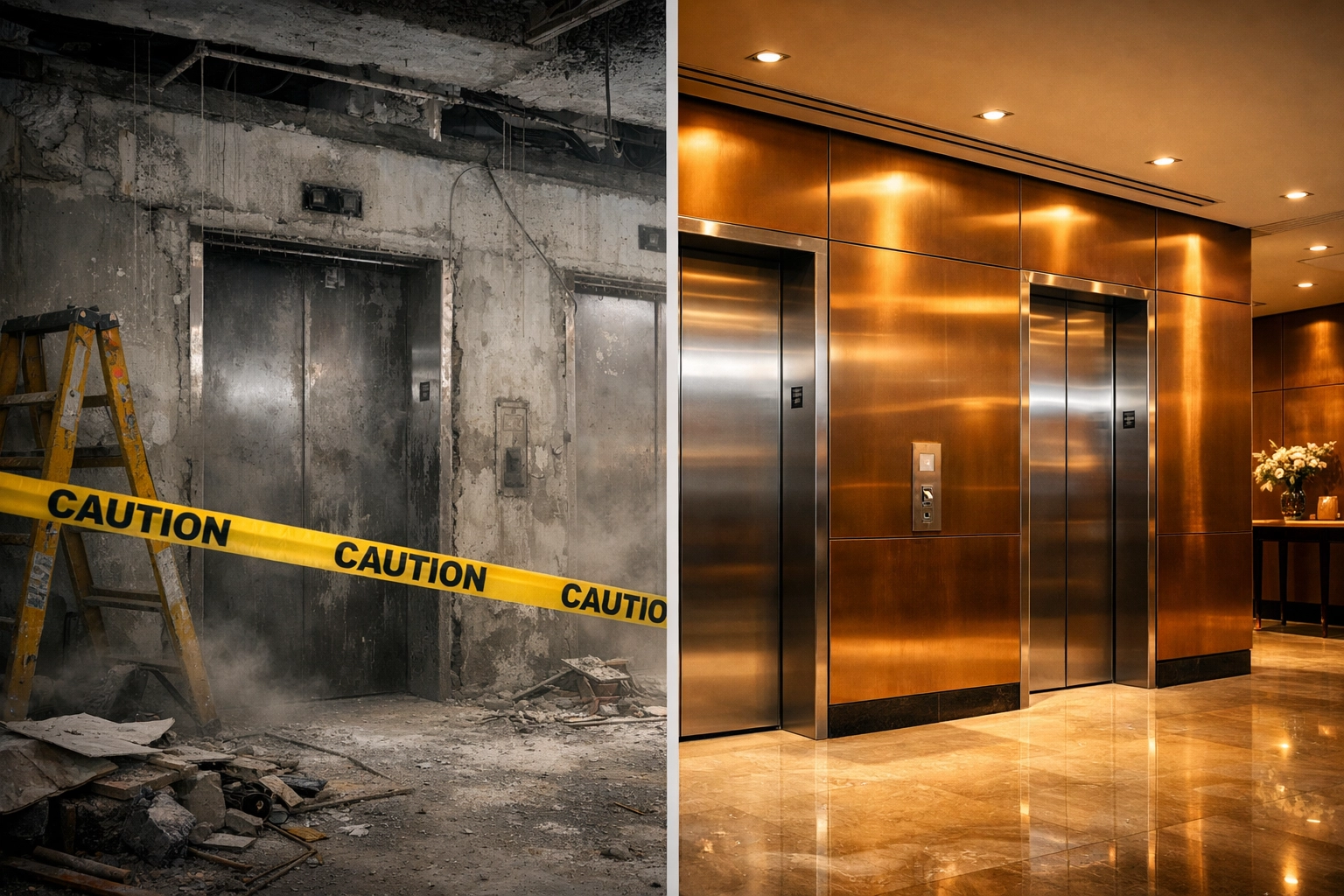
Every property manager eventually hits that "moment of truth" in the lobby. You’re looking at the elevator banks, the entrance doors, or the ornamental trim, and it’s clear: the years haven't been kind. The luster is gone, replaced by scratches, oxidation, and a dull film that no amount of standard janitorial wiping seems to touch.
At this point, you have two paths: you can call a contractor for a full replacement, or you can opt for professional metal restoration.
On the surface, replacement feels like the "cleaner" solution. New is better, right? Not necessarily. When you dig into the actual numbers: the true impact on your CAPEX budget and the long-term ROI: the choice isn't just about aesthetics. It’s about cold, hard math.
Here at Aspen Metal Services, we’ve spent over 30 years helping property managers navigate this exact dilemma. We’ve seen firsthand how a well-executed restoration plan can outperform a replacement project in almost every measurable category.
THE STICKER SHOCK OF REPLACEMENT: LOOKING BEYOND THE QUOTE
When you see a quote for new stainless steel elevator doors or custom bronze entrance fixtures, that number is usually just the tip of the iceberg. Replacement comes with a heavy tail of "hidden" costs that many managers overlook until the project is already underway.
Think about it: a full replacement isn't just a delivery of new parts. It involves:
- Demolition and Disposal: Someone has to tear out the old metal, haul it away, and pay the landfill or recycling fees.
- Permits and Inspections: Structural or major cosmetic changes often trigger a round of bureaucratic red tape and city inspections.
- Code Compliance: The moment you replace a major fixture, you may be required to bring the entire surrounding area up to current building codes: an expense you didn't plan for.
- The "Tenant Tax": This is the cost of disruption. Scaffolding, loud demolition, and "Out of Service" signs on elevators don't just annoy tenants; they can impact your building’s reputation and retention rates.
Research consistently shows that metal restoration is generally better for your property's bottom line, typically saving you 30% to 50% on overall expenses compared to replacement. For specific items like windows or doors, the gap can be even wider. While a full replacement might run you upwards of $700 per unit, a precision restoration often hovers around half that cost while delivering a "like-new" finish.
THE SCIENCE OF METAL RESTORATION: MORE THAN JUST A POLISH
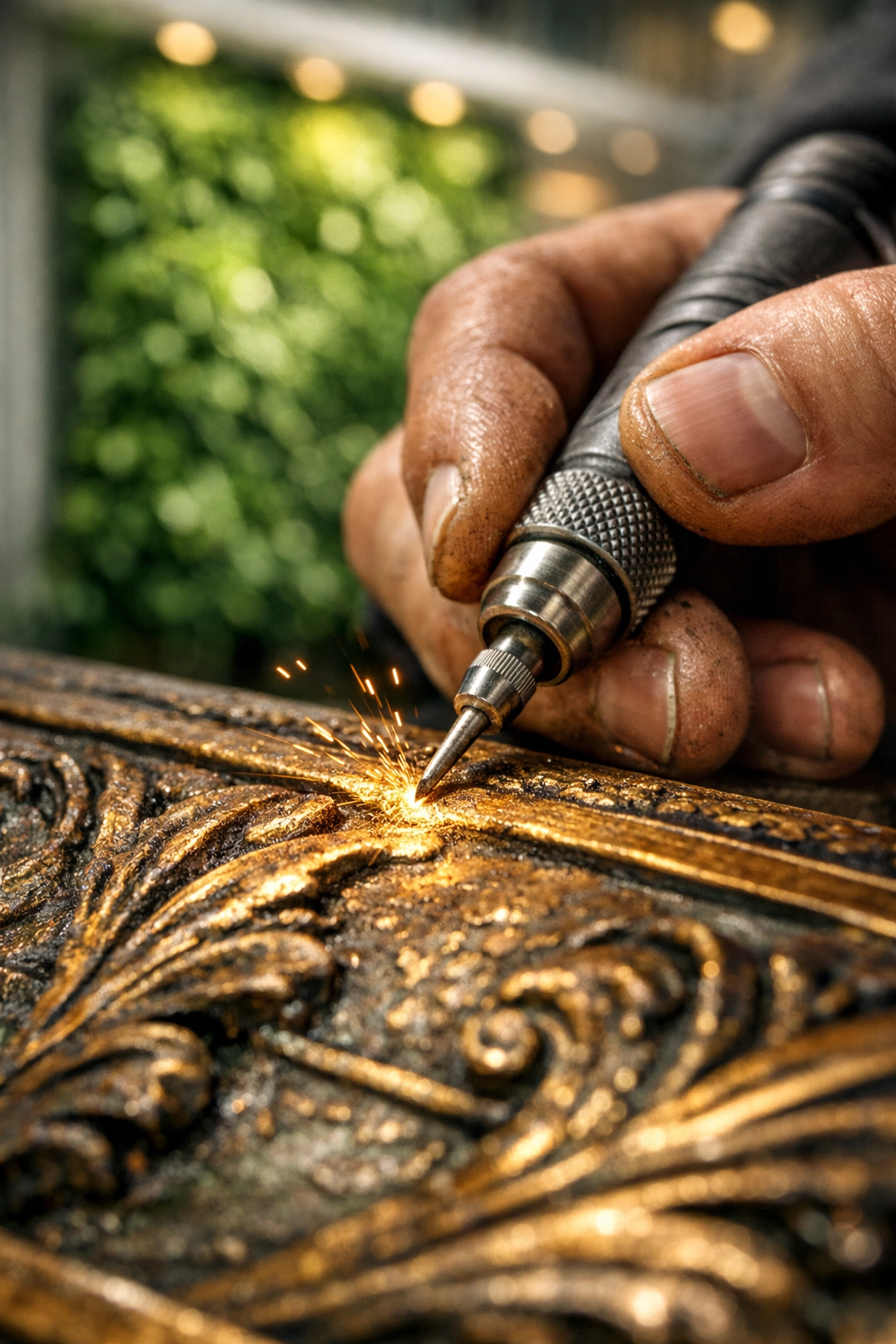
One of the biggest misconceptions in the industry is that restoration is just a "deep clean." That couldn't be further from the truth. Professional metal restoration is a technical process that involves removing layers of oxidation, repairing physical damage, and applying high-performance protective coatings.
At Aspen Metal Services, our precision techniques are designed to work with the specific properties of the metal. Whether it's anodized aluminum, bronze, brass, or stainless steel, each material requires a unique chemical and mechanical approach.
For example, stainless steel in high-traffic areas often suffers from "pitting" and deep scratches. We don't just buff the surface; we re-grain the metal to its original factory finish. This isn't just about looks: it’s about structural integrity. By removing the microscopic pockets where moisture and contaminants hide, we stop corrosion in its tracks.
WHY RESTORATION IS THE ULTIMATE SUSTAINABILITY PLAY
In 2026, property management isn't just about the budget; it's about the "green" footprint. ESG (Environmental, Social, and Governance) goals are now a standard part of the corporate vocabulary.
Replacement is resource-heavy. It requires the mining of new ore, the massive energy consumption of smelting and manufacturing, and the carbon cost of shipping heavy metal components across the globe. Restoration, on the other hand, utilizes the high-quality materials already present in your building.
By choosing to restore, you are:
- Reducing waste diverted to landfills.
- Lowering the embodied carbon of your building’s maintenance cycle.
- Extending the lifecycle of existing assets by decades.
It’s the rare win-win where the cheaper option is also the more responsible one. If you’re curious where your building currently stands on the maintenance spectrum, you might want to check out The "Is It Time to Restore?" Quiz to see if you’re leaving money on the table.
MINIMIZING DISRUPTION: THE LOW-IMPACT ADVANTAGE
One of the most significant benefits of restoration is the "invisible" nature of the work. When we restore a building’s entrance or elevator cabs, we don't need to shut down the lobby for a week.
Our teams work with a low-disruption plan that allows your building to remain fully operational. We can work in phases, during off-hours, or behind discreet screening. To the tenant, it looks like magic: they leave on Friday with a dull, dingy lobby and return on Monday to a space that sparkles.
No construction dust. No heavy machinery. No "pardon our mess" signs that stay up for months.
TENANT SATISFACTION AND THE "PRESTIGE" FACTOR
We often say that first impressions count, and nowhere is this more true than at the entrance of your property. Your building’s metalwork: the door handles, the elevator panels, the lobby directory: are "high-touch" surfaces.
If a tenant or a prospective high-value leasee touches a scratched, grimy elevator button, it creates a subconscious "maintenance deficit" in their mind. They start wondering what else is being neglected. Is the HVAC being serviced? Is the security up to par?
On the flip side, pristine metalwork signals a "Class A" management style. It suggests that every detail is accounted for. We’ve found that elevator cleaning and restoration is one of the single highest ROI activities for property managers looking to boost tenant satisfaction scores.
WHEN SHOULD YOU ACTUALLY REPLACE?
We believe in being straight with our clients. While restoration is almost always the better financial choice, there are rare instances where replacement is the only viable path:
- Structural Failure: If the metal has been neglected for so long that its structural integrity is compromised (e.g., rusted-through supports), restoration can’t fix that.
- Obsolete Systems: If you are upgrading your building's tech: like moving to touch-screen elevator controls: you may need to replace the entire panel.
- Total Redesign: If you are changing the aesthetic from bronze to stainless steel, restoration can change the finish, but it can’t change the base metal.
However, in 90% of the cases we see, the "damage" that property managers think requires replacement is actually just heavy surface degradation that can be completely reversed by a professional team.
30+ YEARS OF PRECISION: THE ASPEN DIFFERENCE
The reason many property managers fear restoration is that they’ve seen it done poorly. We’ve all seen "restored" brass that looks like it was painted with gold spray paint, or "brushed" stainless steel that looks like it was attacked with a kitchen scouring pad.
That’s where experience comes in. With over three decades in the industry, Aspen Metal Services has refined the art of the "invisible repair." We don't just make it look better; we make it look right. Our technicians understand the metallurgy behind the finish, ensuring that the protective layers we apply are bonded correctly for long-term durability.
We address the issues early, preventing the secondary damage that can cause repair costs to skyrocket. This proactive approach leads to lower maintenance costs over the entire lifecycle of your property.
THE BOTTOM LINE: INVEST IN RESTORATION
At the end of the day, your job is to protect the asset and maximize the return for ownership. Replacement is an expense that drains your budget and disrupts your operations. Metal restoration is an investment that preserves your budget, delights your tenants, and protects your fixtures for years to come.
Don't let your building's first impression be a reflection of neglect. Whether you're dealing with oxidized aluminum window frames or battered bronze entrance doors, there is a way to bring back the shine without breaking the bank.
Ready to see the difference for yourself? Explore our blog for more insights on maintaining a world-class property image, or reach out to us directly for a professional assessment of your building's metalwork. After all, your property’s bottom line deserves a finish that lasts.