Blog
Healthcare & High-Touch Surfaces: The Role of Metal Restoration in Cleaner Facilities

Winter in Colorado is a season of survival. Between the relentless snow, the tracked-in de-icing salts, and the height of the respiratory virus season, your facility’s surfaces have been through the ringer. Now that the snow is finally receding and spring is here, it’s time to move past survival mode. It’s time for a deep "detox."
In healthcare environments: from sprawling hospital campuses to boutique medical office buildings: cleanliness isn't just an aesthetic goal: it’s a clinical necessity. While your custodial teams have likely been working overtime with heavy-duty disinfectants, there’s a hidden risk lurking on your high-touch surfaces that standard cleaning simply cannot touch.
We’ve seen it firsthand: the very chemicals used to keep patients safe can, over time, degrade the architectural metal that defines your space. This spring, it’s essential to look beyond the surface level and understand how professional metal restoration plays a critical role in maintaining a truly hygienic facility.
WHY HIGH-TOUCH ISN'T JUST HIGH-TRAFFIC
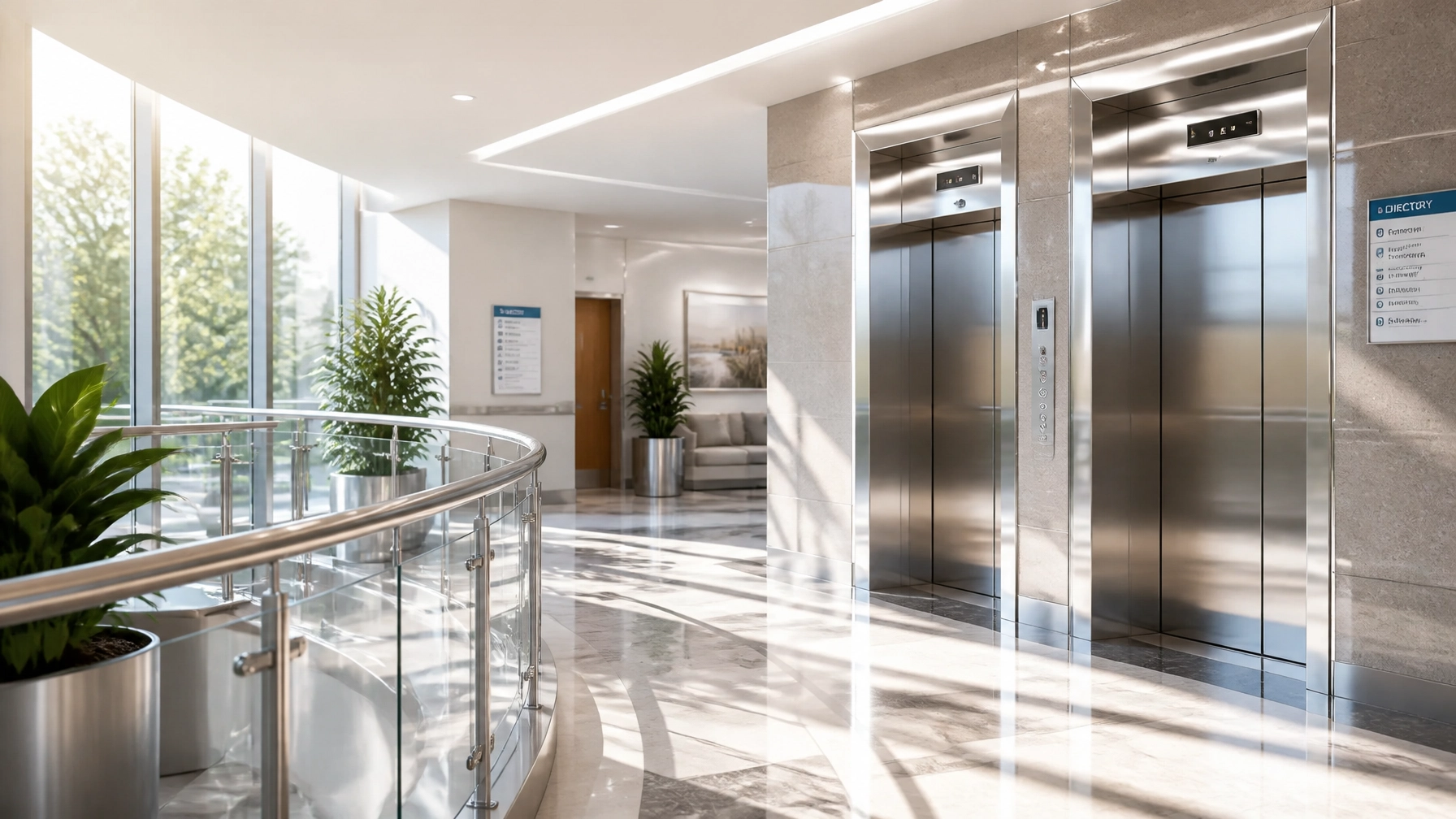
Think about it: how many people touch your elevator buttons, handrails, and door pulls every single hour? In a healthcare setting, these aren't just "metal fixtures"; they are high-frequency transmission points.
Many facilities rely on stainless steel and bronze because they are inherently durable and easy to wipe down. However, "easy to clean" only remains true if the metal's surface remains intact. When we talk about high-touch surfaces, we aren't just talking about the number of hands: we’re talking about the integrity of the material itself.

THE SCIENCE OF SMOOTH: WHERE PATHOGENS HIDE
Here is where many facilities get it wrong: they assume that if a surface is sprayed with disinfectant, it is sterile. But pathogens love to hide in the microscopic world.
Over years of use, metal surfaces develop tiny scratches, pits, and abrasions. These aren't just cosmetic flaws; they are microscopic canyons where bacteria and biofilms can take root, shielded from the reach of a quick wipe-down.
- The Problem: Scratched or corroded metal becomes porous at a micro-level.
- The Risk: Standard cleaning protocols glide over these imperfections, leaving behind reservoirs of pathogens.
- The Solution: Professional metal restoration.
By precision-polishing and refinishing these surfaces, we effectively "close" those canyons. A restored, mirror-smooth finish ensures that your disinfectants can actually reach every square millimeter of the surface. It transforms your high-touch points back into the hygienic barriers they were designed to be. If you're curious about the specifics of this process, our Elevator Cleaning 101 guide dives deeper into the hygiene-surface connection.
THE WINTER HANGOVER: SALT, MOISTURE, AND CHEMICAL STRESS
As we transition into spring, your building is likely suffering from a "winter hangover." The primary culprits? De-icing salts and aggressive cleaning chemicals.
Magnesium chloride and traditional rock salt are devastating to architectural metals. They are highly corrosive and, when tracked into lobbies on the boots of patients and staff, they settle into the thresholds and bases of your elevators and entry doors. If left through the spring, this salt continues to eat away at the metal, leading to permanent pitting and costly structural damage.
Furthermore, the "deep clean" protocols of winter often involve harsh, bleach-based or acidic disinfectants. While effective at killing viruses, these chemicals can strip the protective coatings off your bronze and stainless steel, leaving the bare metal vulnerable to oxidation.
It’s not just about cleaning: it’s about neutralizing. A post-winter restoration service removes these residual salts and restores the protective barriers that keep your metal from corroding during the humid spring and summer months.

PATIENT CONFIDENCE STARTS AT THE ELEVATOR
We often say that the lobby is the "handshake" of your building. In healthcare, that handshake carries even more weight.
When a patient enters a facility and sees tarnished bronze, scratched elevator panels, or corroded handrails, a subconscious seed of doubt is planted. If the visible infrastructure is neglected, what does that say about the invisible care?
- Confidence is visual: Pristine, gleaming metal signals a commitment to excellence and high-level sanitation.
- Atmosphere matters: A well-maintained environment reduces patient anxiety and builds trust in the provider.
- First impressions are lasting: Check out our list of 10 reasons your metal might be making the wrong impression to see if your facility is accidentally sending the wrong message.
RESTORATION VS. REPLACEMENT: THE ROI OF MAINTENANCE
For facilities managers, the logic is simple: restoration is an investment; replacement is a budget-breaking expense.
Architectural metal is designed to last the life of the building, but only if it’s maintained. Replacing an entire elevator cab or a set of custom entrance doors can cost tens of thousands of dollars and cause massive operational disruptions.
Professional restoration allows you to:
- Extend Asset Life: Regular refinishing prevents deep corrosion that necessitates replacement.
- Control Costs: Customizable, a la carte pricing means you only pay for the restoration you need.
- Minimize Disruption: We work efficiently: often after hours: to ensure your facility remains fully operational. We've perfected the low-disruption plan to keep your operations running smooth.

THE SPRING CHECKLIST FOR HEALTHCARE MANAGERS
As you walk your facility this week, keep an eye out for these three red flags:
- The "Salt Line": White, crusty residue at the base of elevator doors or entrance frames.
- Dullness or "Clouding": Stainless steel that looks hazy or bronze that has lost its luster: this is a sign the protective finish has been compromised by cleaning chemicals.
- Tactile Roughness: Run a finger (protected, of course) along a handrail. If it feels "pitted" or rough, it’s a breeding ground for bacteria.
SECURE YOUR FACILITY’S FUTURE THIS SPRING
The transition from winter to spring is the most critical window for metal maintenance. By addressing the damage now, you aren't just making your building look better: you are reinforcing your infection control protocols and protecting your long-term capital investments.
At Aspen Metal Services, we bring over 30 years of experience to the table, specializing in the precision restoration that healthcare environments demand. We understand the stakes are higher in your world, and we treat your metal with the same level of care you provide your patients.
Don't let winter's damage become a permanent fixture. Contact us today for a consultation, and let’s get your facility’s high-touch surfaces back to their clinical best.