Blog
The Science of Oxidation: Why Your Building’s Metal is Changing Color

If you’re a property manager or building owner in Colorado, you know the feeling. The snow finally melts, the tulips start peeking through the dirt, and you take a walk around your property to assess the winter damage.
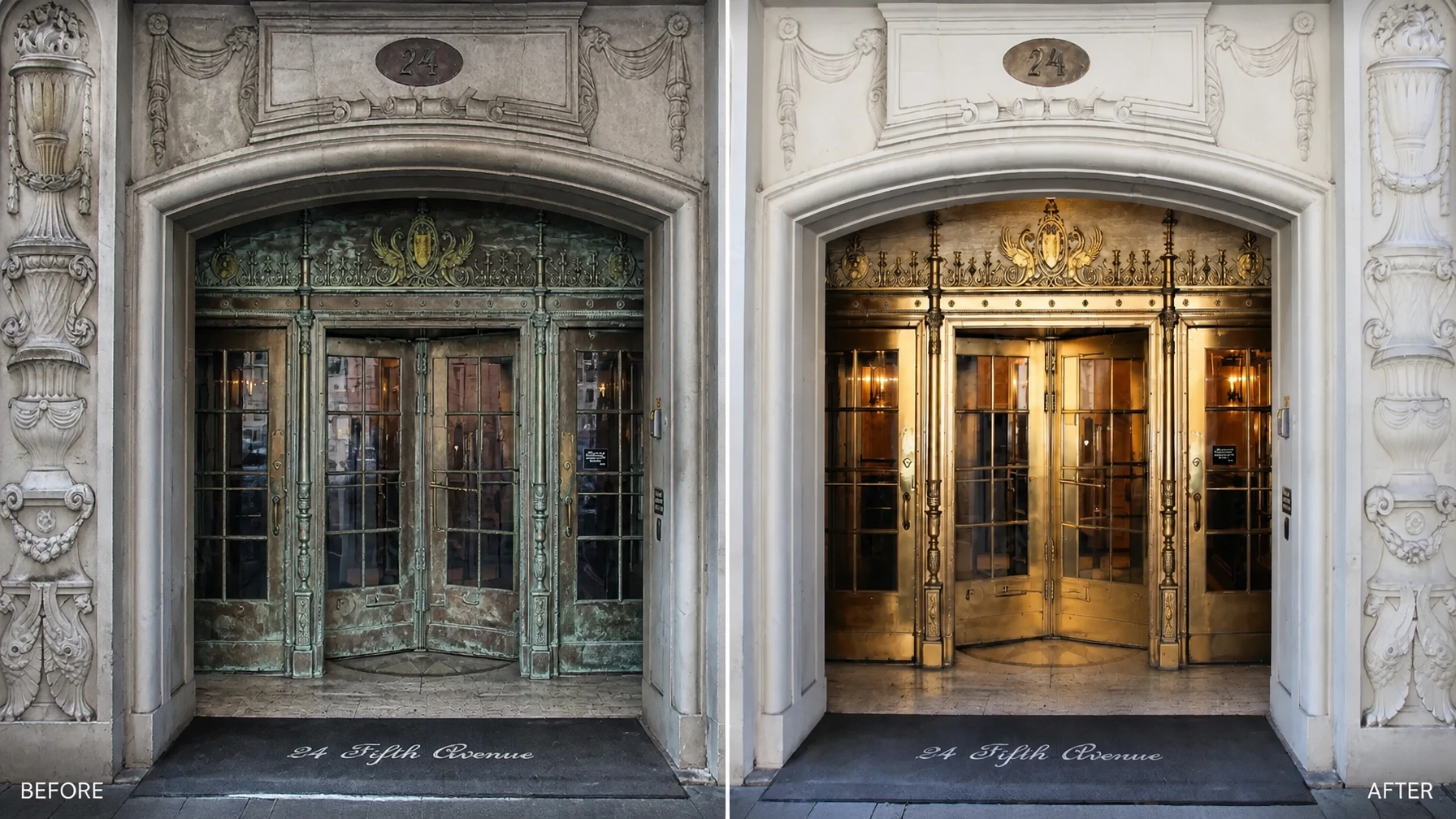
Then you see it: Your beautiful bronze entrance looks blotchy and green. Your "stainless" steel elevator doors have mysterious brown streaks that look suspiciously like tea stains. Your aluminum window frames have developed a weird, chalky white film.
You might be thinking, “Didn’t we just clean this?”
Here’s the reality we’ve seen firsthand over 30 years: Metal isn't a "set it and forget it" material. It’s a living, breathing part of your building’s envelope that is constantly reacting to its environment. When your metal changes color, it’s not just "getting old": it’s undergoing a complex chemical transformation called oxidation.
And if you don’t address it during the critical spring window, that "color change" can quickly turn into permanent structural damage.
THE CHEMISTRY OF THE "VILLAIN": WHAT IS OXIDATION?
At its simplest level, oxidation is what happens when metal atoms lose electrons to oxygen. When you add moisture (like our lovely Colorado snow and spring rain) into the mix, you create a perfect storm for an electrochemical reaction.
Think of it as a slow-motion fire.
When oxygen and water hit your metal surfaces, they create new compounds: oxides, hydroxides, and carbonates. These compounds have different physical properties and, most notably, different colors than the original metal.
- Iron turns into reddish-brown iron oxide (rust).
- Copper and Bronze turn into brown or green copper carbonates (patina).
- Aluminum turns into a dull gray or white aluminum oxide.
But here is where many get it wrong: They think oxidation is just an aesthetic problem. It’s not. While some oxidation (like a controlled patina) can be protective, most of what we see after a Colorado winter is destructive.

THE WINTER HANGOVER: WHY COLOR CHANGES ACCELERATE IN SPRING
If oxidation is the fire, road salt and magnesium chloride are the gasoline.
During the winter, your building’s metal is constantly bombarded by de-icing agents. These salts are "hygroscopic," meaning they attract and hold moisture against the metal surface. Even after the sidewalks are dry, those salt crystals stay tucked into the microscopic "pores" of your metal, keeping the oxidation process running at 10x speed.
Chlorides are particularly aggressive. They don't just sit on the surface; they actively hunt for weaknesses in the metal's protective oxide film. This is why you’ll notice "tea staining": those light brown, rust-colored streaks: on your stainless steel right about now. The salt has literally punched holes in the chromium oxide layer that makes the steel "stainless" in the first place.
STAINLESS STEEL: THE "STAINLESS" MYTH
It’s a common misconception that stainless steel can’t rust. In the industry, we like to say it’s called stain-less, not stain-never.
High-traffic areas like elevator banks are particularly vulnerable. Between the salt tracked in on boots and the acidic oils from thousands of fingerprints, the metal is under constant attack. If you’ve noticed your elevators losing their luster, it’s a sign that the protective surface layer is failing.

Check out our guide on elevator cleaning and tenant satisfaction to see how deep the impact of "dirty" metal really goes. It’s not just about looks; it’s about the perceived safety and value of your entire facility.
BRONZE AND BRASS: THE BATTLE OF THE PATINA
Bronze is perhaps the most misunderstood metal in architectural design. Many architects choose it specifically for its ability to develop a "noble patina": that classic, stately green or deep chocolate brown.
However, there is a massive difference between a natural patina and corrosion.
When winter salt gets into the mix, the patina becomes blotchy, uneven, and "dirty" looking. Instead of a dignified aged look, you get an entrance that looks neglected. For high-end resorts and banks, this is a major hit to curb appeal.
We specialize in restoring historical and architectural brass and bronze to their intended glory. The goal isn't always to make it look brand new (though we can); it’s to ensure the oxidation is uniform and the metal is protected from the elements.

THE SPRING "DETOX": WHY YOU CAN'T JUST POWER-WASH IT
We see this mistake all the time: A well-meaning maintenance crew takes a power washer to a salt-stained entrance.
Stop.
Power washing often drives salt crystals deeper into the crevices of the metal and can strip away whatever protective sealant might be left.
Proper spring metal restoration requires a precision-based approach:
- De-Salting: Using specialized, eco-friendly solutions to chemically neutralize and lift road salts out of the metal’s grain.
- Mechanical Correction: Using fine abrasives and polishing techniques to remove the "bad" oxidation layers without damaging the base metal.
- Refinishing: Restoring the specific grain or mirror finish the metal was designed to have.
- Protection: This is the non-negotiable step.
SUMMER PREP: THE ROLE OF UV PROTECTION
Once the oxidation is gone and the salt is neutralized, you have a "naked" metal surface. If you leave it like that, the high-altitude Colorado sun will bake it, and the oxidation cycle will start all over again by June.
Summer prep is all about barrier protection.
We apply high-grade architectural waxes and specialized sealants that act like sunscreen for your building. These coatings block oxygen and moisture from reaching the metal and provide a "sacrificial layer" that takes the brunt of the UV rays.
Think about it: Would you rather pay to restore the metal every year, or pay for a simple maintenance coat of wax that preserves your five-figure investment? It’s basic ROI logic.
TRANSITIONING FROM WINTER GRIT TO SUMMER GLORY
As we move into the warmer months, your building's exterior becomes your most important marketing tool. Whether you’re managing a luxury apartment complex or a downtown office building, the "face" of your property tells a story to every person who walks through the door.
Is your metal telling the story of a building that is meticulously cared for, or one that is slowly being eaten away by the remnants of last December's snowstorm?
The transition from winter to spring is the most cost-effective time to act. By removing the salt now, you stop the corrosion before it becomes irreversible pitting that requires expensive replacement.
WHY ASPEN METAL SERVICES?
We’ve been doing this for over 30 years. We aren't just "cleaners": we are metal restoration experts. We understand the metallurgy, the chemistry, and the unique challenges of the Colorado climate.
Our customizable a la carte pricing means you only pay for what your building actually needs. Whether it's a one-time "detox" for your stainless steel or a long-term maintenance plan for your historical bronze, we work efficiently without disrupting your tenants or guests.
Don't let your building's metal fade away.
Take a look at your entrance today. If you see the signs of oxidation: the streaks, the dullness, the white spots: give us a call. Let’s get that salt off and get your property ready for a brilliant summer.
