
Blog
The Property Manager's Guide to Scheduling Metal Maintenance Without Disrupting Business

Here's the dilemma every property manager knows too well: your building's metal fixtures need attention, but your tenants need to conduct business. The lobby doors are looking tired. The elevator panels have lost their shine. The handrails are showing their age.
But shutting down high-traffic areas during peak hours? That's a non-starter.
The good news is that metal maintenance doesn't have to mean major disruptions. With the right scheduling strategy, you can keep your building's architectural metal in pristine condition, without a single tenant complaint landing in your inbox.
Let's break down exactly how to make that happen.
WHY SCHEDULING MATTERS MORE THAN YOU THINK
Metal maintenance isn't like changing a light bulb. It requires preparation, proper conditions, and sometimes curing time for protective coatings. Rush the process or squeeze it into the wrong time slot, and you're looking at subpar results, or worse, having to redo the work entirely.
The real cost of poor scheduling isn't just inconvenience. It's the compounding effect of tenant frustration, reduced property appeal, and accelerated wear from postponed maintenance.
Think about it: every week you delay because "the timing isn't right" is another week of oxidation, another week of foot traffic grinding dirt into unprotected surfaces. The longer you wait, the more intensive, and disruptive, the eventual restoration becomes.
THE TIERED APPROACH: YOUR NEW BEST FRIEND
The most effective property managers we work with don't treat metal maintenance as a single annual event. They use a tiered system that spreads the work across manageable intervals.
Here's a framework that works:
Monthly Quick Checks
These require no special scheduling gymnastics. A quick visual inspection of high-touch surfaces, door handles, push plates, elevator buttons, takes minutes and can happen during regular building rounds. You're looking for early signs of wear, fingerprint buildup, or minor scratches that haven't yet become eyesores.
Quarterly Light Maintenance
This is where you address what the monthly checks revealed. Light cleaning, spot polishing, and minor touch-ups fall into this category. The key here is that these tasks are fast and quiet, perfect for early mornings or during naturally slower periods.
Semi-Annual Deep Cleaning
Now we're talking about more thorough work. Deep cleaning, protective coating applications, and addressing any developing corrosion issues. This requires coordination, but it's still manageable with proper planning.
Annual Full Assessment
Once a year, step back and evaluate everything. What needs restoration? What's holding up well? This is your planning session for the next 12-24 months of metal maintenance.
TIMING IS EVERYTHING: WHEN TO SCHEDULE WHAT
Not all maintenance windows are created equal. Here's where many property managers get it wrong, they schedule based on their availability, not on optimal conditions for the work.
Early mornings win. For most commercial properties, the window between 6 AM and 8 AM is golden. Lobbies are quiet. Elevators see minimal traffic. Your maintenance team can work efficiently without navigating around foot traffic.
Weekends aren't always the answer. Yes, the building might be emptier, but weekend work often comes with premium labor costs. For routine maintenance, weekday off-hours typically make more financial sense.
Seasonal alignment matters. Metal behaves differently in extreme temperatures. Scheduling protective coating applications during moderate weather ensures better adhesion and curing. Here in Colorado, that means spring and fall are prime time for major metal restoration work.

THE COMMUNICATION PLAYBOOK
Even perfectly scheduled maintenance can create friction if tenants feel blindsided. Your communication strategy is just as important as your timing.
The 72-hour rule: For any work that affects common areas, notify tenants at least 72 hours in advance. This gives them time to adjust their routines, whether that means taking a different entrance or timing their elevator trips.
Be specific about impact. "Lobby maintenance on Thursday" tells tenants nothing useful. "Entrance door restoration Thursday 6-9 AM, please use south entrance during this time" tells them exactly what they need to know.
Under-promise on timing. If you expect the work to take two hours, communicate a three-hour window. Finishing early makes you look efficient. Running over makes you look unreliable.
GROUPING TASKS FOR MAXIMUM EFFICIENCY
Here's a scheduling hack that reduces total disruption time: batch similar tasks together.
If you're already blocking off the lobby for door restoration, that's the perfect time to address the adjacent handrails and directory frame. One disruption, multiple items checked off the list.
This requires some advance planning. Work with your metal maintenance provider to identify which tasks can be combined without compromising quality. At Aspen Metal Services, we often help property managers map out these grouped maintenance sessions during our initial assessments.
The result? Fewer total disruption events throughout the year, even if individual sessions run slightly longer.
ELEVATOR MAINTENANCE: A SPECIAL CASE
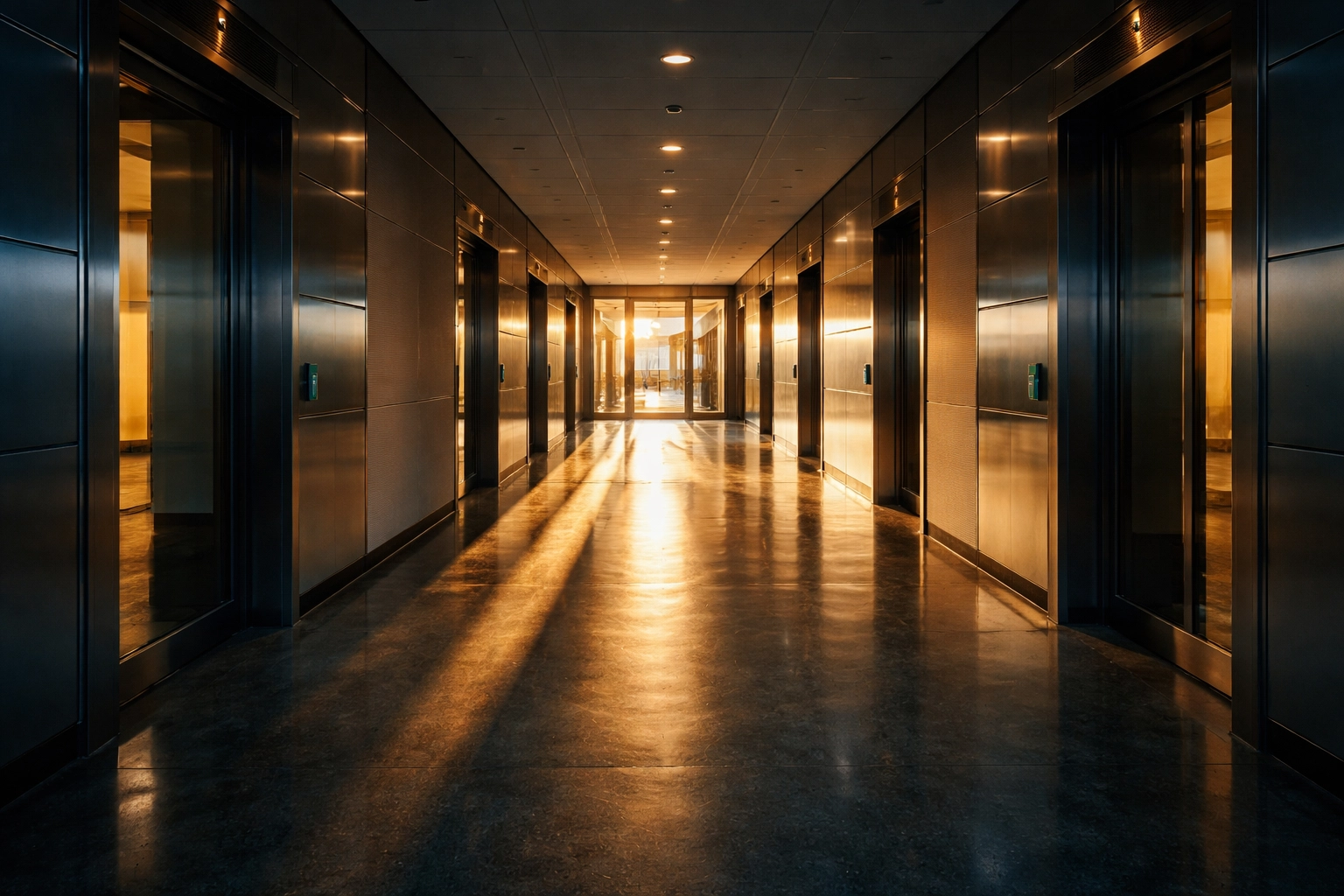
Elevators deserve their own strategy. They're the highest-traffic metal surfaces in most buildings, and they're also the hardest to take offline.
The solution is a rotating approach. If your building has multiple elevators, schedule maintenance on one unit at a time during off-peak hours. Tenants retain full vertical mobility while each cab gets the attention it needs.
For buildings with single elevators, early morning windows become even more critical. Most elevator panel cleaning and polishing can be completed in 30-45 minutes, well before the morning rush begins.
Want to dive deeper into elevator-specific strategies? Check out our guide on elevator cleaning and tenant satisfaction.
WEATHER AND ENVIRONMENTAL FACTORS
Metal maintenance isn't just about your schedule: it's about conditions.
Humidity affects curing times. Protective sealants and coatings need specific humidity ranges to cure properly. Your maintenance provider should be tracking this and may need to adjust timing based on weather forecasts.
Temperature swings cause problems. Scheduling exterior metal work when temperatures are fluctuating dramatically can lead to condensation issues and compromised finishes.
Indoor climate matters too. If your HVAC system is being serviced or the building is experiencing unusual temperature fluctuations, it's worth delaying sensitive metal finishing work until conditions stabilize.
BUILDING YOUR ANNUAL MAINTENANCE CALENDAR
Let's put this all together into a practical planning tool.
January-February: Annual assessment and 12-month planning. Identify all metal elements needing attention and prioritize by urgency and visibility.
March-April: First semi-annual deep cleaning. Weather is moderating, making it ideal for any protective coating work.
May-August: Quarterly maintenance rounds. Focus on high-touch, high-visibility areas. Watch for increased wear from summer traffic.
September-October: Second semi-annual deep cleaning. Prepare metal surfaces for winter conditions. Address any corrosion before harsh weather arrives.
November-December: Quarterly maintenance plus holiday prep. Your entrance doors and lobby metal should look their absolute best for increased holiday visitor traffic.
WORKING WITH YOUR MAINTENANCE PROVIDER
The right metal maintenance partner makes scheduling infinitely easier. Look for providers who offer:
Flexible scheduling options. They should be willing to work around your building's unique traffic patterns, not force you into their convenient time slots.
Realistic time estimates. Experienced providers know exactly how long each task takes and can give you accurate windows for tenant communication.
Proactive communication. They should confirm appointments 24-48 hours in advance and alert you immediately if any timing issues arise.
Documentation. After each service, you should receive a summary of work completed and recommendations for future maintenance: this feeds directly into your planning calendar.
THE BOTTOM LINE
Metal maintenance doesn't have to mean disruption. With a tiered scheduling approach, strategic timing, clear tenant communication, and the right maintenance partner, you can keep your building's architectural metal looking impeccable year-round.
The property managers who master this aren't just avoiding complaints: they're protecting their asset value, extending the life of expensive fixtures, and creating first impressions that attract and retain quality tenants.
That's not maintenance. That's smart property management.
Ready to build a maintenance schedule that works for your building? Reach out to our team for a customized assessment and scheduling plan.