Blog
The Ultimate Metal Restoration Debate: Modern Shine or Antique Patina?

Here's a question that sparks surprisingly passionate opinions among property managers, building owners, and restoration professionals alike: When you restore your building's architectural metal, should you bring it back to a gleaming, mirror-like finish, or preserve that rich, aged patina that tells a story?
It's not a simple answer. And honestly? There's no universally "right" choice.
We've seen this debate play out countless times in conference rooms, on job sites, and in email threads that go way longer than anyone expected. Some folks want their brass elevator doors to look like they just came off the showroom floor. Others would rather keep that warm, weathered bronze tone that gives their historic lobby its character.
So let's break it down. We're laying out the case for both sides, and then we want to hear from you. Drop your vote in the comments below.
THE CASE FOR MODERN SHINE
Let's start with the polished perfection crowd. And honestly, there's a lot to love about this approach.
First impressions are everything. When a potential tenant, client, or investor walks into your building, they're making snap judgments. A gleaming brass handrail or brilliantly polished stainless steel elevator panel signals one thing loud and clear: this property is well-maintained.
There's a psychological element at play here. Bright, reflective surfaces read as clean, new, and premium. They catch the light, they photograph beautifully, and they create an immediate sense of quality.

It's easier to maintain consistency. When you're managing a large property with metal fixtures installed at different times, polishing everything to a uniform shine creates visual cohesion. No more mismatched tones between the original 1980s door hardware and the 2015 additions.
Some metals simply look better polished. Stainless steel, chrome, and aluminum were designed to shine. Letting them go dull doesn't add character, it just looks neglected.
And here's the practical angle: polished surfaces are often easier to clean and maintain on a day-to-day basis. Fingerprints and smudges wipe away more easily, and your maintenance staff can keep things looking sharp with minimal effort.
THE CASE FOR ANTIQUE PATINA
Now let's talk about the other side of the coin, and this perspective has some serious weight behind it, especially in certain contexts.
Patina tells a story. That warm, darkened tone on your building's original bronze door handles? It represents decades of use, of history, of authenticity. For historic properties, heritage buildings, or spaces with architectural significance, that patina isn't damage, it's character.
Professional conservators have been saying this for years: authentic aging has value. Collectors prize original finishes on antique pieces, and the same principle applies to architectural metalwork. Stripping away that natural aging can actually diminish a building's historic integrity.
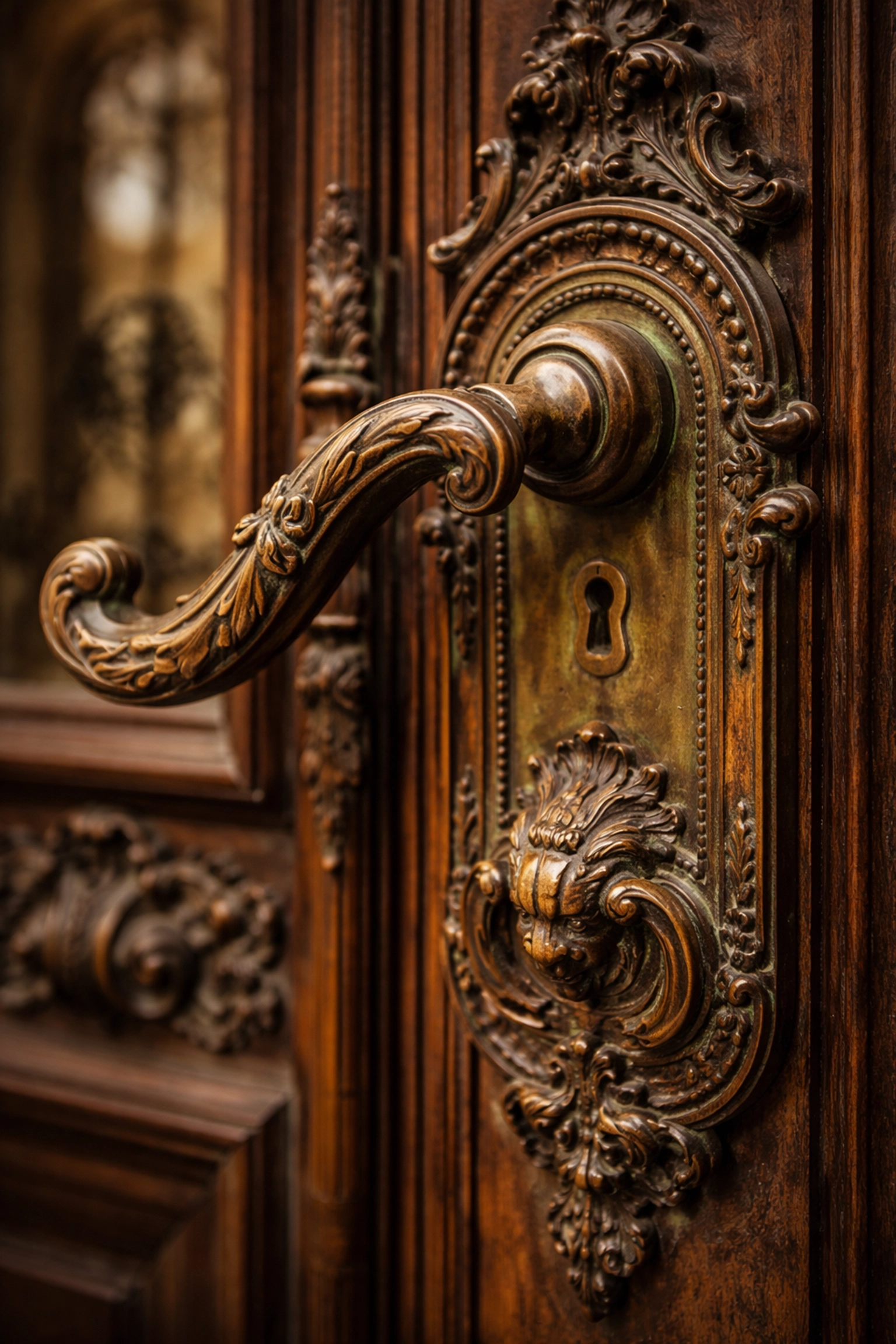
It creates warmth and sophistication. There's a reason high-end design studios often specify "living finishes" that develop patina over time. That aged brass or weathered bronze creates a richness that brand-new polished metal simply can't replicate. It's the difference between a new leather jacket and one that's been worn for twenty years.
You can't fake it. Here's what many people don't realize: once you polish away a naturally developed patina, you can't get it back. Not really. Exact duplication of decades of natural aging is nearly impossible. So that decision to polish? It's often irreversible.
For buildings with original metalwork from the early 20th century or even mid-century modern pieces, preserving that patina maintains a connection to the property's authentic history.
THE MIDDLE GROUND: HARMONIZING FINISHES
Here's where things get interesting, and where we've seen some of the best results in our work at Aspen Metal Services.
You don't always have to choose between extremes.
Professional metal restoration isn't just about making things shiny or leaving them aged. It's about finding the right balance for your specific property, your specific metal, and your specific goals.
On brass and bronze, patina can be softened, deepened, or evened out so the age remains visible without looking neglected. You keep the character while eliminating the "worn out" appearance. The metal still tells its story, it just tells it more elegantly.
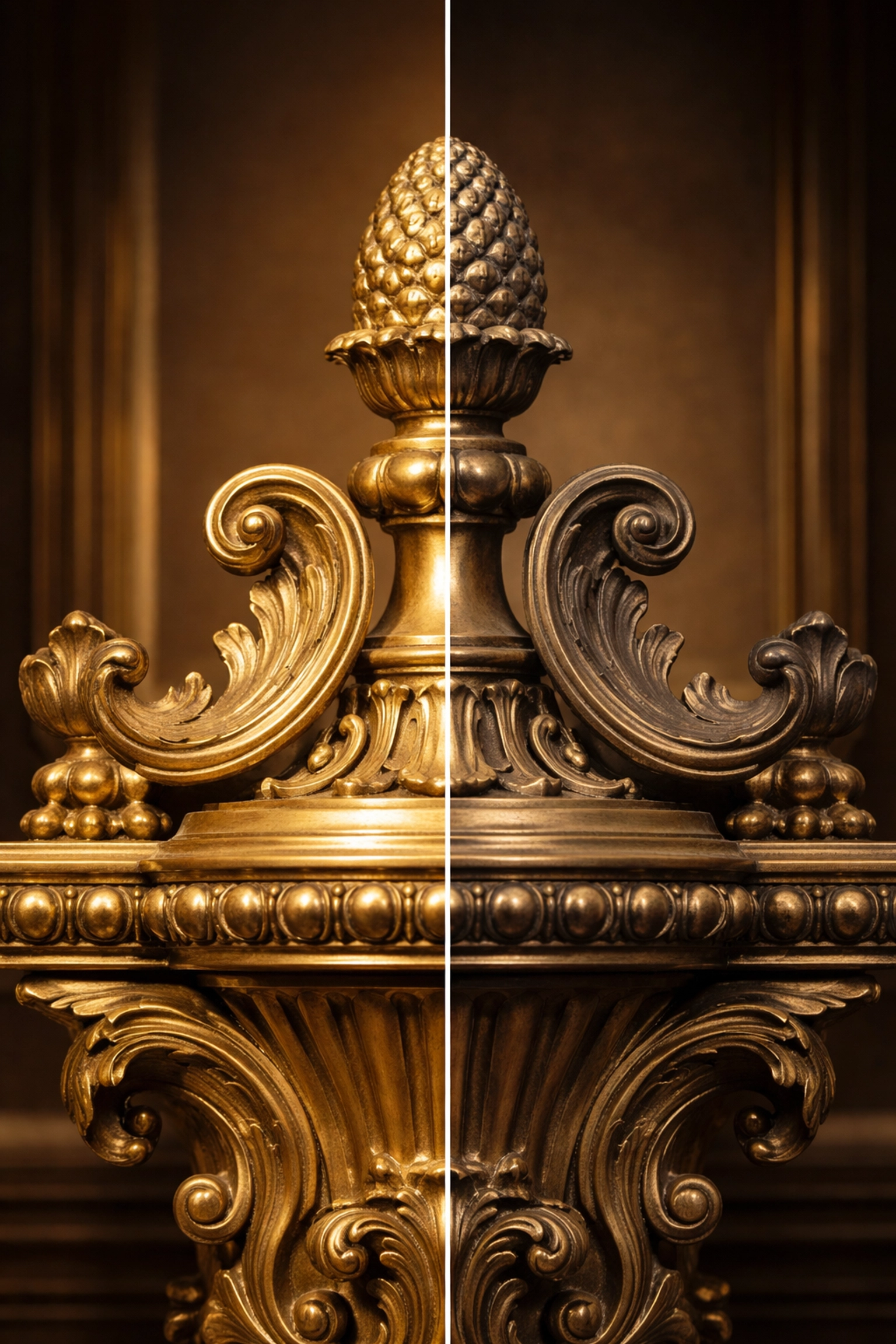
On silver and stainless pieces, you might aim for a bright finish with slightly deeper tones in recessed areas. This creates dimension and visual interest while still delivering that clean, well-maintained look.
The goal isn't to make metal look brand new or to leave it looking old. The goal is a unified, respectful appearance that honors both the material and its context.
Think about it: a 1920s art deco lobby shouldn't have metalwork that looks like it was installed yesterday. But it also shouldn't look like no one's touched it in fifty years. The sweet spot is somewhere in between.
CONTEXT IS EVERYTHING
So how do you decide which direction to go? Here are the questions we ask clients when they're wrestling with this choice:
What's the building's character? A sleek modern high-rise calls for different treatment than a historic brownstone. Match your metal restoration approach to your architecture.
Who's your audience? Tech startups might prefer that contemporary polish. Law firms in heritage buildings might lean toward preserved patina. Know what your tenants and visitors expect.
What's the metal's original intent? Was it designed to shine? Or was it chosen specifically for how it would age? Understanding the original design intent can guide your decision.
What's your maintenance capacity? Highly polished finishes require more frequent attention to maintain. Patinated finishes are often more forgiving of everyday wear.
Is the metalwork original or replacement? Original historic pieces often warrant more preservation-minded approaches. Newer replacement hardware might benefit from a fresh polish.
REAL TALK: WHAT WE'VE SEEN WORK
After years of working on properties across Colorado, here's our honest take:
Most buildings benefit from a hybrid approach. High-touch, high-visibility pieces like entrance doors and elevator interiors often warrant more polish and shine. These are the pieces people see and touch constantly: they need to look impeccable.
But decorative elements, historic fixtures, and architectural details? These often look better with some preserved patina. They add depth and interest without demanding the same level of daily maintenance.
The key is intentionality. Don't let your metal "just happen." Make a deliberate choice about how each element should look, then maintain it consistently.
NOW WE WANT TO HEAR FROM YOU
We've laid out both sides of the debate. We've shared our professional perspective. But ultimately, this comes down to preference: and we're genuinely curious where you land.
So here's our question:
When it comes to your building's architectural metalwork, which do you prefer?
🔹 Modern Shine – Give me that mirror-like polish, gleaming surfaces, and brand-new appearance.
🔹 Antique Patina – Keep the character, the warmth, and the authentic aged appearance.
🔹 Somewhere in Between – Harmonize the finish: clean it up, but preserve the history.
Drop your answer in the comments below. We'd love to know what drives your preference: is it aesthetics? Practicality? The type of property you manage?
And if you've got a great example of metal restoration done right (in either direction), share that too. We might feature it in an upcoming post.
The debate is open. Let's hear it.