Blog
Is Your Entrance Door Coating Failing? Spot the Warning Signs Before It’s Too Late

Your entrance doors take a beating. Sun exposure, temperature swings, moisture, constant handling: all while serving as your building's handshake with every visitor, tenant, and potential client who walks through.
Here's the thing: that protective coating on your entrance doors isn't permanent. It degrades gradually, so quietly that most property managers don't notice until the damage becomes expensive to fix.
We've seen it countless times. A building looks sharp from a distance, but up close? The entrance doors tell a different story: one of deferred maintenance and declining property value.
Let's talk about what you need to watch for, because catching coating failure early is the difference between a simple refresh and a complete door replacement.
WHY DOOR COATINGS FAIL (AND WHY IT MATTERS)
Door coatings exist for one primary reason: protection. They shield the underlying material: whether metal or wood: from environmental damage that would otherwise deteriorate the door's structure and appearance.
But protective coatings don't last forever. UV radiation breaks down the chemical bonds in paint and sealant. Temperature fluctuations cause expansion and contraction, creating microscopic cracks. Humidity seeps into those cracks, accelerating the breakdown.
Think about it: your entrance doors are exposed to every weather condition, every day, with no break. That coating is fighting a constant battle against the elements.
When the coating fails, moisture becomes your biggest enemy. Water infiltration leads to rust on metal doors and rot on wooden ones. Both scenarios compromise structural integrity and create safety risks: not to mention the visual impression of neglect.
THE WARNING SIGNS YOU CAN'T IGNORE
Smart property managers don't wait for obvious damage. They catch the early indicators and address them before small problems become budget nightmares.
Here's what coating failure looks like in real time:
Fading and Discoloration
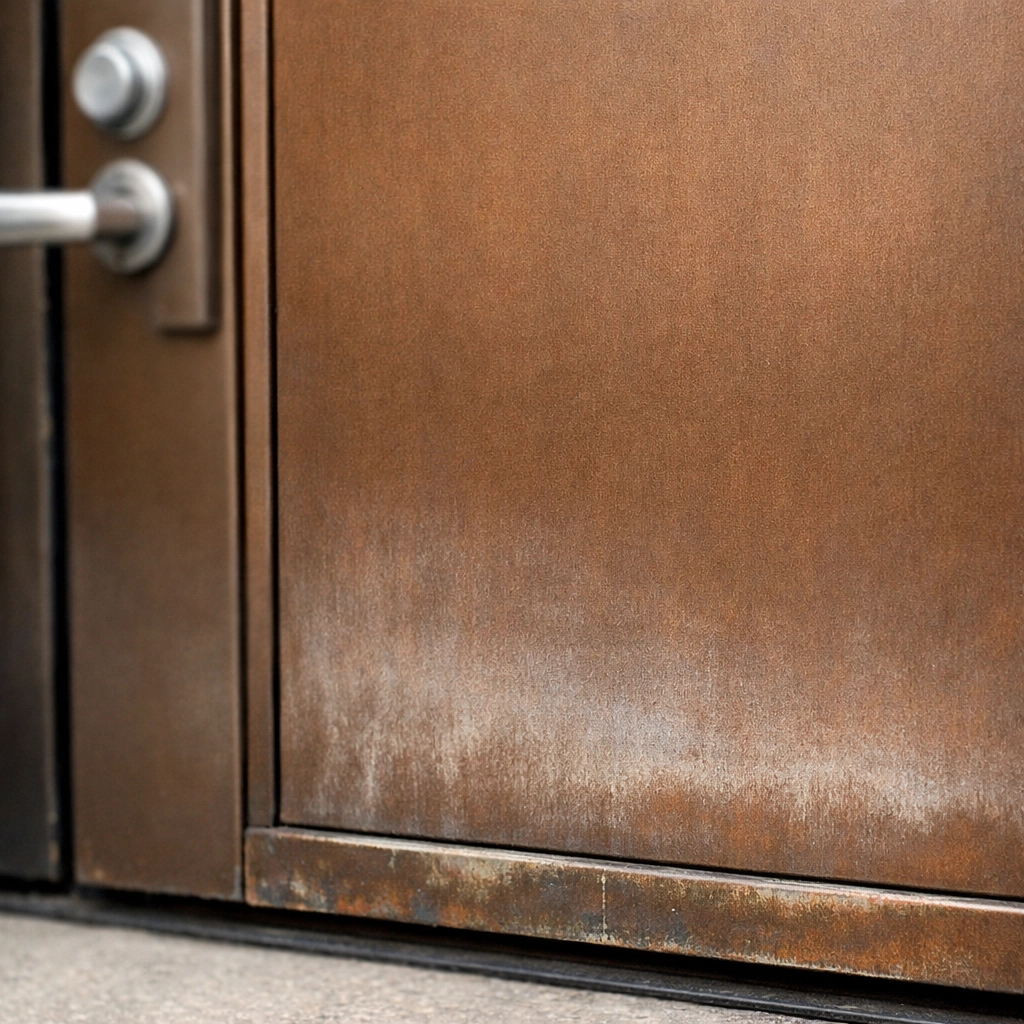
When your door's color starts looking washed out or develops a chalky, whitish cast, that's your coating breaking down at the molecular level. The pigments are degrading, and more importantly, the protective properties are failing.
Discoloration also shows up as yellowish, brownish, or dark streaks: especially near the bottom of doors or around hardware. These aren't just cosmetic issues. They're visual proof that moisture has penetrated the coating and is attacking the material underneath.
Peeling, Bubbling, and Cracking
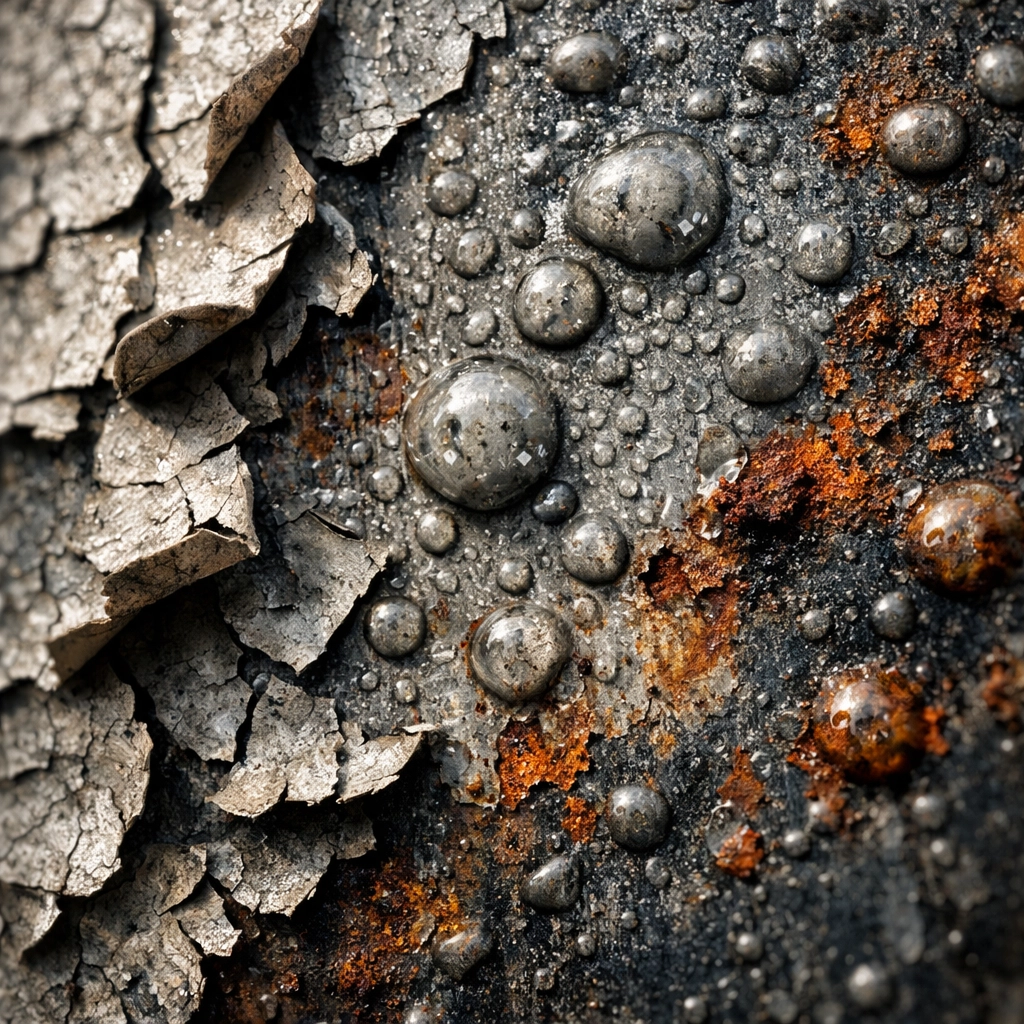
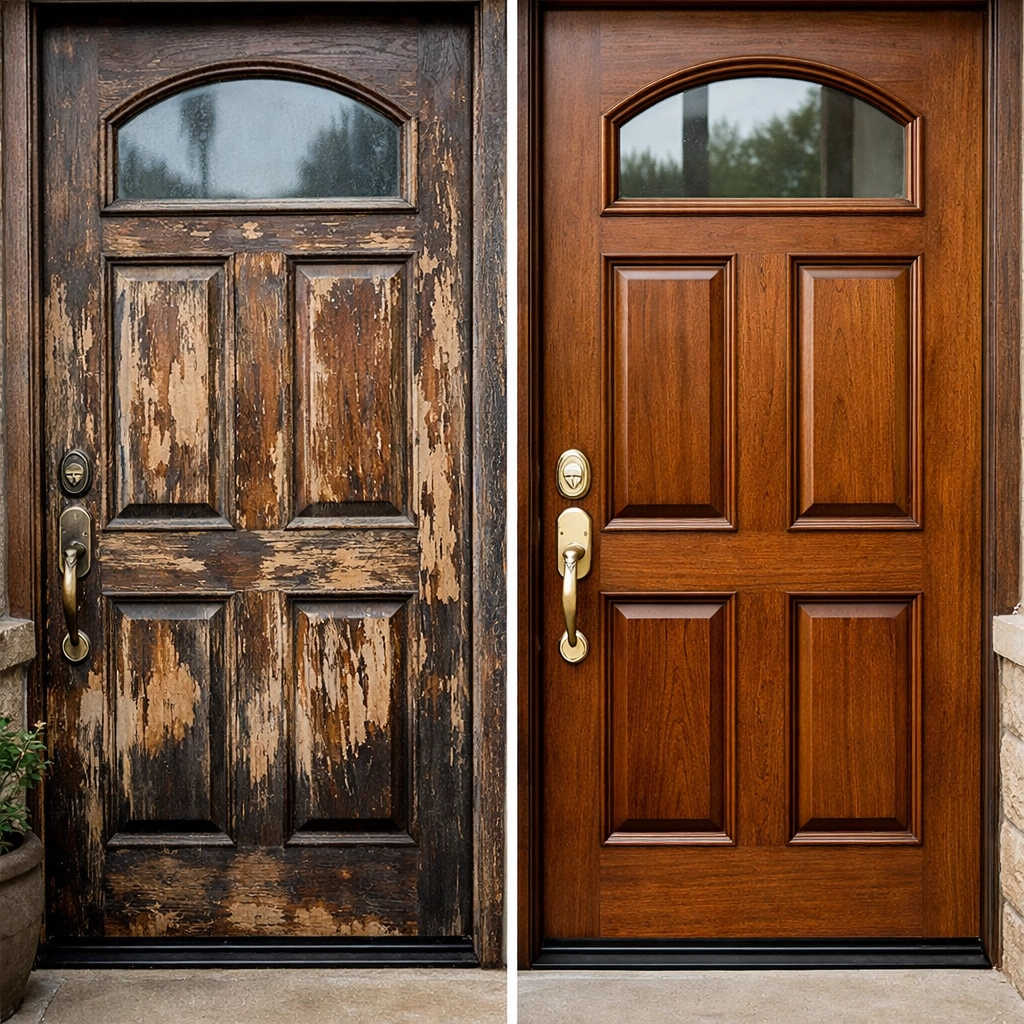
This is where coating failure becomes obvious. Peeling paint means the bond between coating and substrate has failed. Bubbles indicate moisture trapped beneath the surface, pushing the coating away from the door material.
Cracks in the finish create pathways for water, dirt, and contaminants to reach the vulnerable material below. On wooden doors, this is particularly problematic because wood naturally expands and contracts with temperature changes: those cracks widen over time, accelerating the damage cycle.
Rust Formation on Metal Components
Notice rust spots on your metal entrance doors or hardware? That's your coating's protective barrier completely compromised. Metal doors develop rust when moisture reaches bare metal, and once rust starts, it spreads beneath the coating like cancer: often doing significant damage before you realize how extensive the problem has become.
Even small rust spots deserve immediate attention. They're not isolated incidents; they're symptoms of coating failure that's likely more widespread than what's visible on the surface.
Surface Texture Changes
Run your hand across your entrance door. Does it feel rough, dry, or unexpectedly textured in spots? A failing coating often develops a gritty or uneven surface texture as the protective layer deteriorates.
On wooden doors, watch for areas that feel soft or spongy when you press them. Soft wood is rotting wood, and it means the coating failed long enough ago that water damage has progressed deep into the material.
THE HIDDEN COSTS OF IGNORING THE PROBLEM
Here's where many property managers get it wrong: they see a faded door and think it's purely aesthetic. It's not just about appearance: it's about what's happening underneath that finish.
Structural Deterioration
When moisture penetrates a failed coating, it doesn't stop at the surface. On metal doors, rust weakens the structural integrity over time. The door becomes more susceptible to dents, warping, and eventually, failure at stress points like hinges and handles.
Wooden doors face an even more aggressive timeline. Water infiltration causes rot that compromises the door's strength and stability. Rot attracts wood-boring insects and creates perfect conditions for mold growth: both of which accelerate damage exponentially.
The Cascade Effect
Coating failure rarely stays contained to the doors themselves. Moisture that penetrates door coatings often finds its way into door frames, thresholds, and surrounding building materials. What starts as a surface-level problem on your entrance doors becomes a structural issue affecting your building envelope.
We've seen cases where ignored coating failure on entrance doors led to frame rot, water damage in adjacent walls, and even compromised weather sealing that increased HVAC costs throughout the building.
WOOD VS. METAL: DIFFERENT MATERIALS, DIFFERENT RISKS
Your entrance door material determines how coating failure manifests and how quickly damage progresses.
Wooden Entrance Doors
Wood is hygroscopic: it naturally absorbs and releases moisture based on environmental conditions. This makes wooden doors particularly vulnerable once coating protection fails.
The progression on wood doors typically follows this pattern: First, you notice fading or peeling. Then moisture begins penetrating the exposed areas. The wood swells and contracts with humidity changes, creating additional stress on the remaining coating and accelerating peeling. Eventually, rot sets in, and the structural damage becomes irreversible without major intervention.
Wooden doors also develop soft spots where water has saturated the material. These areas become entry points for parasites and create aesthetic problems that signal neglect to everyone who enters your building.
Metal Entrance Doors
Metal doors face a different enemy: oxidation. Once the protective coating fails and moisture reaches bare metal, rust formation begins immediately.
The insidious part about rust on metal doors is that it spreads beneath intact coating. You might see a small rust spot on the surface while extensive corrosion is occurring underneath, hidden from view until the damage becomes severe.
Metal doors also develop pitting and surface irregularities as rust progresses. These imperfections trap moisture and contaminants, creating a self-reinforcing cycle of deterioration.
WHAT TO DO WHEN YOU SPOT THE SIGNS
Early intervention is everything. Catch coating failure in its initial stages, and you're looking at a relatively straightforward restoration process. Wait until the damage is extensive, and you're facing replacement costs that could have been avoided.
Here's the action hierarchy:
If you're seeing minor fading or the beginning of a chalky appearance, a professional recoating might restore full protection. The key is addressing it before moisture penetration occurs.
When you notice peeling, bubbling, or isolated rust spots, the timeline becomes more urgent. These signs indicate that moisture is already compromising the door material. Professional assessment becomes critical: you need to know whether the underlying damage can be repaired or if replacement is the more cost-effective option.
For soft spots on wood or extensive rust on metal, you're likely past the point where simple refinishing will solve the problem. These conditions indicate structural compromise that requires either significant restoration work or complete door replacement.
The cost difference between early intervention and delayed action is dramatic. We're talking about the difference between a few hundred dollars for professional recoating versus thousands for door replacement: plus the associated costs of frame repair, hardware replacement, and potential building envelope issues.
THE BOTTOM LINE
Your entrance doors are working assets, not static decorations. That coating protects your investment, maintains your building's curb appeal, and prevents expensive structural problems down the line.
Catching coating failure early isn't optional: it's smart property management. Walk your entrance areas regularly. Look for the warning signs we've outlined. Run your hand across the door surfaces. Pay attention to what the condition of those coatings is telling you about the health of your doors and your building.
When you spot the early indicators of coating failure, you have an opportunity to address the problem before it becomes expensive. That's not just about maintaining appearances: it's about protecting your property value and avoiding the cascade of problems that come with deferred maintenance.
Your entrance doors are talking to you. The question is whether you're listening before it's too late.
Need a professional assessment of your entrance door coatings? At Aspen Metal Services, we specialize in identifying coating failure before it becomes costly structural damage. Let's talk about protecting your investment.